Waterproofing
Basement Waterproofing vs. Drainage: What Should You Fix First?
Legacy Construction NYC Corp · · 11 min read
Compare basement waterproofing vs. drainage to identify the cause of basement leaks, understand repair options, and decide what Bronx homeowners should fix first.
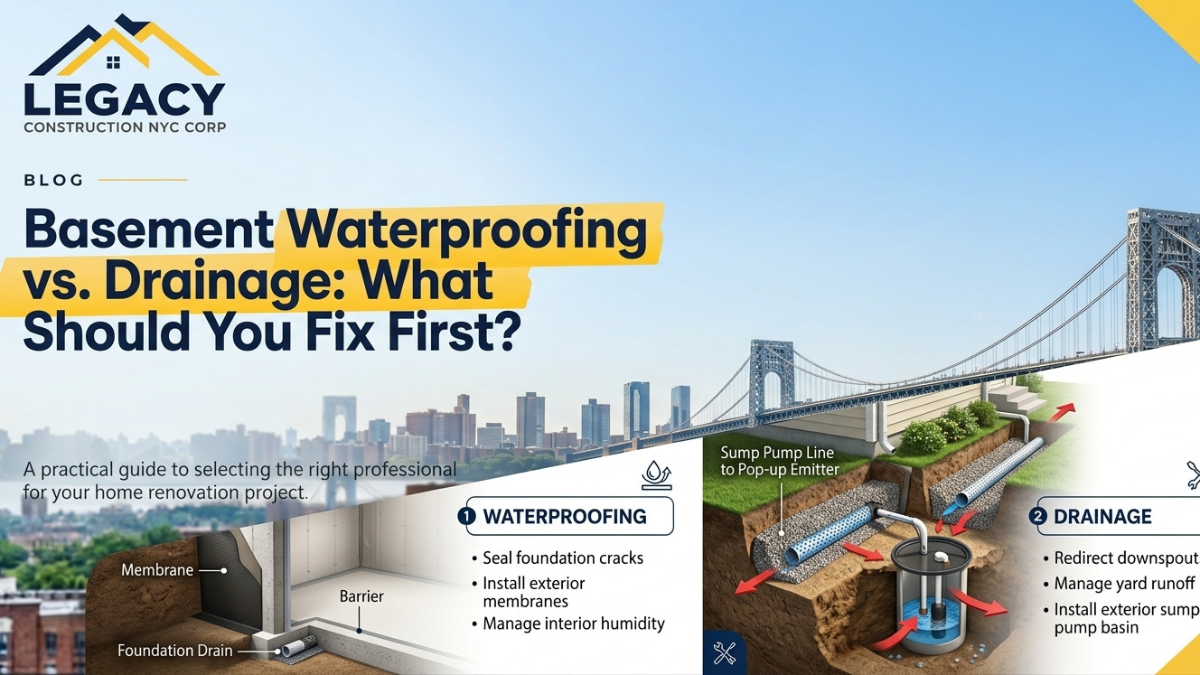
Water in a basement can come from several sources, including poor exterior drainage, leaking foundation walls, groundwater pressure, or plumbing problems. The right repair depends on where the water originates and how it enters the building. For some properties, correcting the slope of the ground and redirecting rainwater may be enough to reduce moisture. Others need a drainage system, foundation waterproofing, or a combination of both.
Before spending money on repairs, Bronx homeowners should identify the source of the water and determine whether it is reaching the foundation from outside or entering through the walls and floor. In many cases, drainage should be checked first, but active leaks and groundwater problems may require a different approach.
What Is the Difference Between Basement Waterproofing and Drainage?
Basement waterproofing and drainage work together, but they solve different problems. Understanding the difference helps property owners choose repairs based on the cause of the moisture rather than treating only the visible damage.
What Is Basement Waterproofing?
Basement waterproofing involves measures designed to prevent water from passing through foundation walls, floor joints, cracks, and other vulnerable areas. Depending on the building and the source of moisture, the work may involve exterior waterproofing membranes, sealing suitable entry points, repairing foundation defects, or installing an interior water-management system.
Common reasons to consider waterproofing include:
- Water seeping through foundation walls or floor joints.
- Repeated damp patches that remain after rainwater has drained away.
- Water entering through cracks in concrete or masonry.
- Persistent moisture associated with groundwater pressure.
- Peeling paint, mineral deposits, or damaged basement finishes linked to water intrusion.
The correct waterproofing method depends on the foundation, soil conditions, groundwater levels, and location of the leak. Simply applying a coating over a damp wall may not solve the underlying issue if water pressure or drainage problems remain.
What Is Basement Drainage?
Basement drainage focuses on collecting and directing water away from the foundation or managing water that reaches the basement.
Depending on the property, drainage improvements may include:
- Cleaning and repairing gutters and downspouts.
- Extending downspouts to discharge water away from the foundation where permitted.
- Correcting ground slopes that direct rainwater toward the building.
- Clearing blocked exterior drains.
- Installing or repairing foundation drainage systems.
- Adding an interior perimeter drain and sump pump where appropriate.
Drainage is particularly important when water accumulates around the foundation during heavy rain. New York State's residential building code includes requirements for foundation drainage and foundation waterproofing under specified conditions. The appropriate system depends on the property's construction and site conditions. See the New York State Residential Code for related requirements.
Basement Waterproofing vs. Drainage: Key Differences
| Factor | Basement Waterproofing | Basement Drainage |
|---|---|---|
| Main purpose | Reduces water penetration through foundation walls and floors | Collects or redirects water away from the building |
| Common applications | Foundation seepage, vulnerable joints, and certain groundwater conditions | Poor grading, water accumulation, blocked drains, and foundation water buildup |
| Typical work | Waterproofing membranes, appropriate crack repairs, and sealing vulnerable areas | Downspout improvements, grading corrections, drains, and sump pumps |
| Best starting point | When inspection indicates water is penetrating the foundation | When water collects around the property or flows toward the foundation |
| Main limitation | May fail to resolve water pressure or excessive water accumulation on its own | May not stop water entering through defects or porous foundation materials |
| Relationship | Protects vulnerable parts of the building from water intrusion | Helps control where water travels and where it is discharged |
Neither option is automatically the better choice. Some basements need drainage improvements alone, while others require waterproofing, drainage, or a coordinated system that addresses both.
What Should You Fix First: Waterproofing or Drainage?
The first repair should address the main source of the water. For many properties, checking exterior drainage is a sensible starting point because it can reveal relatively straightforward causes before more extensive foundation work is considered.
However, the sequence depends on what an inspection reveals.
1. Start With Exterior Drainage if Rainwater Collects Near the Foundation
Look at the property during or shortly after rainfall. Check whether water pools beside the basement walls, flows toward the house, or spills close to the foundation from gutters and downspouts.
Possible warning signs include:
- Puddles that remain beside the building after rain.
- Downspouts discharging too close to foundation walls.
- Soil that slopes toward the house.
- Overflowing or blocked gutters.
- Water entering the basement mainly during heavy rainfall.
If these conditions are present, correcting the source of surface water may reduce the amount reaching the foundation. It is often worth checking these items before investing in a larger waterproofing project.
For example, a Bronx property with a blocked downspout may experience water seepage near one basement wall during storms. Clearing the blockage and directing roof runoff away from the building could reduce the problem. If the wall continues to leak, further investigation may still be necessary.
2. Investigate Waterproofing if Water Passes Through Walls or Floor Joints
If water appears through foundation cracks, masonry joints, or the joint where the basement floor meets the wall, the problem may involve defects in the foundation or pressure from groundwater.
Signs that warrant a closer assessment include:
- Damp areas that return after surface water has been redirected.
- Water marks along foundation walls.
- Mineral deposits left behind as moisture evaporates.
- Repeated seepage through cracks or joints.
- Water appearing through the floor or at the wall-floor connection.
In these situations, drainage may still be part of the solution, but waterproofing or foundation repairs may also be needed. The goal is to identify how water reaches the building and select a repair method suited to that pathway.
Avoid assuming that every crack needs the same treatment. Some cracks are cosmetic, while others may indicate movement or a structural issue that requires professional assessment.
3. Address Active Flooding or Suspected Plumbing Leaks Promptly
If the basement has standing water, the priority is to protect occupants and property and identify the source. Water from a burst pipe, sewer backup, or electrical hazard requires a different response from gradual seepage after rainfall.
Keep people away from flooded areas containing electrical equipment, and do not enter standing water if electrical hazards may be present. Contact the appropriate emergency service or qualified professional when necessary.
If water appears to be coming from an internal pipe, a licensed plumber may need to locate and repair the leak. NYC311 also provides information about reporting certain basement water leaks and drainage problems through its water leak and water drainage complaint resources.
How to Identify the Source of Basement Water
Before choosing a repair, record when the moisture appears, where it starts, and whether it changes with weather conditions. These details can help a contractor narrow down the likely cause.
| What You Notice | Possible Cause | What to Check First |
|---|---|---|
| Water appears after heavy rain | Surface drainage problems or foundation seepage | Gutters, downspouts, grading, exterior drains, and foundation walls |
| Dampness remains on one wall | Foundation seepage, cracks, or moisture migration | Wall condition, nearby ground levels, and external water sources |
| Water collects at the wall-floor joint | Groundwater pressure, joint leakage, or drainage issues | Foundation conditions and the need for a suitable drainage or waterproofing system |
| Musty smells and high humidity without visible water | Moisture intrusion, condensation, or inadequate ventilation | Humidity, cold surfaces, plumbing, and signs of hidden moisture |
| Water appears regardless of rainfall | Plumbing leaks, groundwater, or another persistent source | Plumbing lines, water supply, drainage systems, and groundwater conditions |
| Water enters through a window well | Poor window-well drainage or surface runoff | Window-well drains, covers, surrounding grading, and nearby downspouts |
These signs are useful clues, not definitive diagnoses. Several problems can occur at the same time, particularly in older buildings.
Can You Fix Basement Drainage Without Waterproofing?
Yes, in some situations. If water is reaching the foundation because of poor grading, clogged gutters, or incorrectly directed downspouts, correcting those issues may reduce the amount of water reaching the basement.
However, drainage improvements may not be sufficient when water passes through foundation defects, the groundwater level is high, or water pressure builds beneath or around the structure.
Likewise, waterproofing alone may not solve a problem if water continues to collect around the building. The water source and the condition of the foundation should guide the repair plan.
A sensible approach is to:
- Inspect gutters, downspouts, exterior drains, and ground slopes.
- Check basement walls, floor joints, and visible cracks for signs of water entry.
- Determine whether the issue follows rainfall, occurs continuously, or appears unrelated to the weather.
- Assess whether the foundation needs repairs, waterproofing, drainage improvements, or a combination of measures.
- Confirm that collected water can discharge through an approved system.
Where extensive excavation, persistent groundwater, or structural concerns are involved, consult an appropriately qualified professional before choosing a system.
Basement Waterproofing and Drainage Costs: What Affects the Price?
The cost of basement water repairs varies considerably because the work depends on the cause, accessibility, and scale of the problem. A blocked downspout or simple grading correction is different from installing a perimeter drain or excavating around a foundation.
The main factors affecting the price include:
- Extent of water intrusion: A small, isolated leak may require less work than repeated flooding across the basement.
- Foundation condition: Cracks, deteriorated masonry, and damaged joints may need repair before waterproofing.
- Drainage requirements: A project may involve drain cleaning, new drainage lines, a sump pump, or changes to the way water leaves the property.
- Access to the foundation: Exterior work may require excavation, removal of landscaping, or access around neighboring structures.
- Basement finishes: Finished walls, flooring, storage, and other materials may need to be removed to reach the affected area.
- Water disposal and local requirements: The proposed system must discharge water appropriately and comply with applicable building and plumbing requirements.
Ask for an itemized estimate that explains the suspected cause, recommended repairs, work included, and any exclusions. If a contractor recommends a major waterproofing installation, ask what evidence supports the recommendation and whether simpler drainage corrections should be completed first.
Common Mistakes to Avoid When Fixing Basement Water Problems
Choosing a repair without understanding the source can lead to recurring moisture and unnecessary expense.
Sealing Visible Cracks Without Investigating the Cause
Sealing a crack may help in appropriate circumstances, but it may not address groundwater pressure, movement, or water collecting outside the foundation. The crack should be assessed before selecting a repair.
Ignoring Gutters and Downspouts
Roof runoff can contribute to water accumulation near the foundation. If gutters overflow or downspouts discharge too close to the house, those issues should be considered as part of the overall water-management plan.
Installing a Drain Without Planning the Discharge
A drainage system needs a suitable, approved place to send collected water. Installing a drain without addressing discharge requirements can leave the property with an incomplete solution.
Covering Damp Walls Before Resolving the Moisture
New paint, flooring, or wall panels can hide signs of ongoing water intrusion. Resolve the underlying moisture issue and allow affected areas to dry appropriately before rebuilding finished surfaces.
Treating Every Basement Leak as a Waterproofing Problem
Some water problems come from plumbing failures, condensation, or exterior drainage rather than a failed waterproofing system. Identifying the source first helps prevent repairs that target the wrong issue.
When Should You Contact a Basement Waterproofing Contractor in the Bronx?
Consider a professional inspection if water keeps returning, moisture affects finished rooms, foundation cracks are changing, or several parts of the basement show signs of water intrusion.
A contractor can examine the visible conditions, assess likely entry points, and explain whether the property may need drainage improvements, waterproofing, foundation repairs, or additional investigation.
For Bronx homeowners, the assessment should account for the building's age, foundation type, surrounding ground levels, neighboring properties, and where rainwater can be discharged. Work involving excavation or changes to drainage may also require permits or other approvals, depending on the project.
Legacy Construction NYC Corp provides construction-related services for property owners in the area. You can learn more about its Bronx contractor services or review its waterproofing services to understand the available options for addressing building moisture concerns.
Frequently Asked Questions
1. Is basement waterproofing better than drainage?
Neither is universally better. Waterproofing helps prevent water from entering through foundation walls and floors, while drainage collects or redirects water away from the building. The correct option depends on the source of the moisture, and some basements need both.
2. Should I fix drainage before waterproofing?
Drainage should be checked early, particularly when water collects around the foundation after rain. Correcting surface-water problems may reduce moisture, but persistent seepage or groundwater pressure may require waterproofing or additional measures.
3. Can basement waterproofing stop flooding?
It depends on the cause of the flooding. Waterproofing can help control certain types of water intrusion, but flooding caused by sewer backups, plumbing leaks, or substantial groundwater may require different or additional solutions.
4. What are the signs of poor basement drainage?
Common signs include water pooling near the foundation, overflowing gutters, downspouts discharging close to the building, damp basement walls after rainfall, and water entering through window wells or floor joints.
5. Does a sump pump replace basement waterproofing?
Not necessarily. A sump pump can collect and remove water from a properly designed drainage system, but it does not automatically prevent water from passing through foundation walls. The pump, drainage system, and waterproofing measures should be selected according to the property's conditions.
6. Can I waterproof my basement from the inside?
Some interior waterproofing and water-management methods can help manage basement moisture. However, the appropriate approach depends on how water enters the building. An interior treatment may not resolve exterior drainage problems or structural defects.
7. How do I know whether a basement crack is causing the leak?
Look for water marks, dampness, mineral deposits, or seepage around the crack, especially after rain. These signs do not establish the cause on their own. Have cracks assessed if they widen, recur, leak repeatedly, or appear alongside other signs of foundation movement.
8. Who should I contact for basement waterproofing in the Bronx?
Look for a contractor with relevant experience in foundation moisture, drainage, and waterproofing. Ask for an assessment of the water source, an itemized estimate, and an explanation of why the proposed work is appropriate for your property. For possible structural movement, seek an appropriately qualified structural professional.
Should You Fix Drainage or Waterproofing First?
Start by identifying and controlling the source of the water. If rainwater collects beside the foundation because of poor grading, blocked gutters, or downspout placement, drainage corrections are often a sensible first step. If water continues to enter through foundation walls, cracks, or floor joints, waterproofing or foundation repairs may also be necessary.
In some basements, the most reliable solution involves both. Drainage helps manage water around the structure, while waterproofing protects vulnerable foundation surfaces from water intrusion. Neither should be selected solely because it is the more familiar or less expensive option.
An inspection that identifies the cause can help you prioritize repairs, avoid unnecessary work, and make a more informed decision about protecting your basement.
Reviewed by Legacy Construction NYC Corp roofing team, Licensed & insured New York roofing contractors
Frequently asked questions
Is basement waterproofing better than drainage?
Neither is universally better. Waterproofing helps prevent water from entering through foundation walls and floors, while drainage collects or redirects water away from the building. The correct option depends on the source of the moisture, and some basements need both.
Should I fix drainage before waterproofing?
Drainage should be checked early, particularly when water collects around the foundation after rain. Correcting surface-water problems may reduce moisture, but persistent seepage or groundwater pressure may require waterproofing or additional measures.
Can basement waterproofing stop flooding?
It depends on the cause of the flooding. Waterproofing can help control certain types of water intrusion, but flooding caused by sewer backups, plumbing leaks, or substantial groundwater may require different or additional solutions.
What are the signs of poor basement drainage?
Common signs include water pooling near the foundation, overflowing gutters, downspouts discharging close to the building, damp basement walls after rainfall, and water entering through window wells or floor joints.
Does a sump pump replace basement waterproofing?
Not necessarily. A sump pump can collect and remove water from a properly designed drainage system, but it does not automatically prevent water from passing through foundation walls. The pump, drainage system, and waterproofing measures should be selected according to the property's conditions.
Can I waterproof my basement from the inside?
Some interior waterproofing and water-management methods can help manage basement moisture. However, the appropriate approach depends on how water enters the building. An interior treatment may not resolve exterior drainage problems or structural defects.
How do I know whether a basement crack is causing the leak?
Look for water marks, dampness, mineral deposits, or seepage around the crack, especially after rain. These signs do not establish the cause on their own. Have cracks assessed if they widen, recur, leak repeatedly, or appear alongside other signs of foundation movement.
Who should I contact for basement waterproofing in the Bronx?
Look for a contractor with relevant experience in foundation moisture, drainage, and waterproofing. Ask for an assessment of the water source, an itemized estimate, and an explanation of why the proposed work is appropriate for your property. For possible structural movement, seek an appropriately qualified structural professional.