Storm damage
Bronx Roofing Guide: How to Spot Storm Damage Before It Becomes a Bigger Problem
Legacy Construction NYC Corp · · 9 min read
Storm damage is not always obvious from the street. Learn the roof damage signs you can spot safely from the ground, what a professional inspection covers, and how to document a claim.
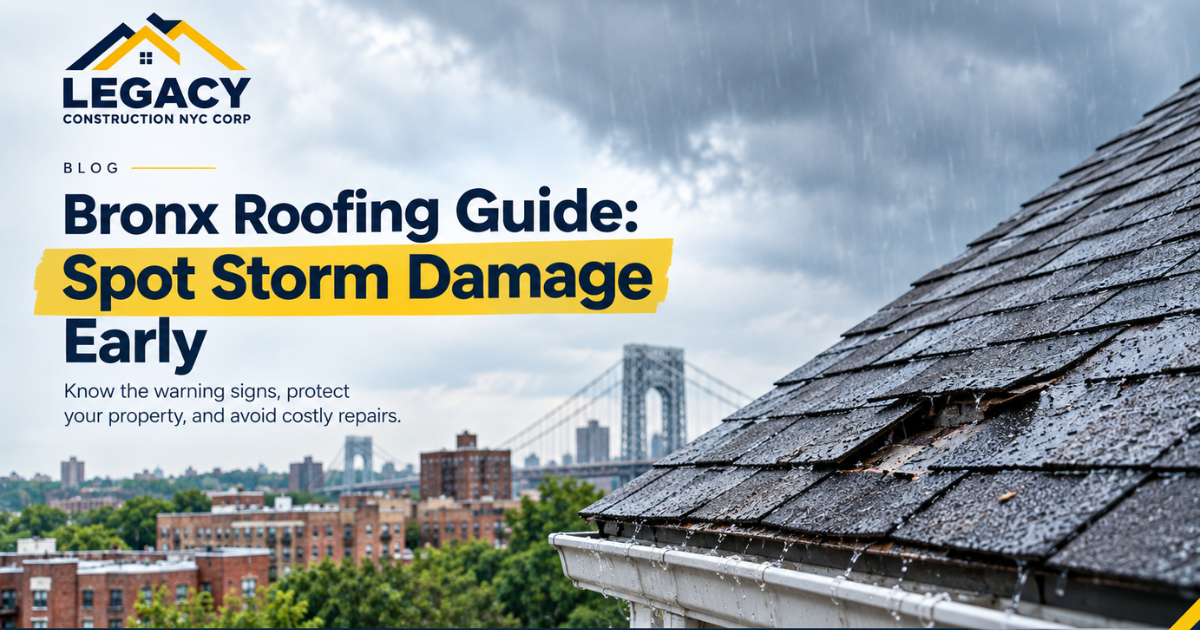
Heavy rain can make an existing roofing problem much worse, especially when a roof already has aging shingles, worn flashing, blocked drainage points, or previous repairs. In the Bronx, where homes and multi-family buildings include a mix of older construction and flat-roof properties, storm-related roof problems can sometimes start with a small leak and develop into more expensive interior damage.
Knowing the early roof damage signs can help property owners act before moisture spreads into ceilings, walls, insulation, or other parts of the building. A professional storm damage roof inspection can also identify problems that are difficult to see from the ground.
What Should You Do After a Storm?
After a major storm, look for visible signs such as missing or displaced shingles, damaged flashing, standing water, clogged roof drains, ceiling stains, damp walls, or water entering the attic. Avoid climbing onto a wet or damaged roof yourself. Instead, arrange a post-storm roof inspection with a qualified roofing professional who can determine whether the roof needs minor repairs, emergency protection, or more extensive work.
If water is actively entering the building, prompt emergency roof repair can help limit additional damage while a permanent repair is assessed.
Why Bronx Roofs Are Especially Vulnerable After Heavy Rain
The Bronx experiences a mixture of residential, multi-family and commercial properties, and their roofs can vary considerably in age, design and condition. Heavy rainfall does not necessarily create a roofing problem by itself, but it can expose weaknesses that were already present.
Recent National Weather Service alerts demonstrate that the Bronx can experience periods of excessive rainfall and flash-flooding conditions. For example, during an August 2026 event, the National Weather Service reported rainfall rates of approximately 1 to 2 inches per hour, with additional rainfall possible across the Bronx and other parts of New York City.
That level of rainfall can put additional pressure on roof drainage systems and vulnerable areas of an aging roof.
Flat and Low-Slope Roofs on Multi-Family Buildings
Flat and low-slope roofs are common on many urban buildings, including multi-family properties and commercial structures. Unlike steeply pitched roofs, they rely heavily on properly functioning drains, scuppers and other drainage points to move water away from the building.
When drains become blocked by leaves, debris or other material, water can collect on the roof surface. Existing cracks, deteriorated membrane areas, loose flashing or poorly sealed penetrations can then become potential entry points for moisture.
Standing water should not automatically be treated as proof of a roof failure, but persistent ponding after rainfall deserves attention. Our flat roofing page explains how these systems are built and repaired.
| Potential problem | What it can lead to |
|---|---|
| Blocked roof drains | Water accumulation |
| Damaged flashing | Moisture intrusion around edges and penetrations |
| Cracked or deteriorated roofing | Localized leaks |
| Loose roof materials | Further storm damage |
| Poor drainage | Repeated ponding and moisture exposure |
Aging Roofing Materials Common in Older Bronx Homes
Older roofing systems may have already experienced years of weather exposure before a major storm arrives. Shingles can become brittle, flashing can deteriorate, and previous repairs may no longer provide a reliable seal.
The Insurance Information Institute notes that the age and condition of a roof can influence insurance coverage and how an insurer assesses roof damage. It also notes that an old or poorly maintained roof can increase the potential for damage to ceilings, walls and other parts of a property.
This is why a storm inspection should consider both the immediate damage and the existing condition of the roofing system.
Signs of Storm Damage You Can Spot From the Ground
You do not need to climb onto a roof to identify potential warning signs. A visual check from a safe location around the property can reveal clues that justify a closer inspection.
Look around the roofline, exterior walls, gutters and visible roofing areas after severe weather. If you notice something unusual, take photographs from a safe position and arrange a professional assessment.
Water Stains on Ceilings and Walls
A brown, yellow or discolored patch on a ceiling may indicate that water has entered somewhere above it. Bubbling paint, peeling finishes or damp-looking areas around walls can also be warning signs.
However, the location of an interior stain does not necessarily identify the exact point where water entered the roof. Water can travel through roofing layers, insulation, framing and other building components before becoming visible indoors.
This is one reason a roof leak repair Bronx property owner may need should begin with finding the source of the moisture rather than simply covering the visible stain.
Missing, Curling, or Displaced Shingles
From ground level, look for shingles that appear to be missing, lifted, curled or noticeably out of alignment.
Strong winds can loosen roofing materials, while heavy rain can expose weaknesses around areas that were already deteriorated. You may also notice pieces of roofing material in the yard or near gutters after a storm.
Do not attempt to climb onto the roof to check these areas yourself, particularly when surfaces are wet. A professional can assess the roof safely and determine whether the visible problem is isolated or part of wider storm damage.
Other Roof Damage Signs to Watch For
Some storm-related warning signs are less obvious but still worth checking:
- Damaged or loose gutters and downspouts
- Cracked or displaced flashing
- Debris around roof drains
- Water pooling after rainfall
- Damaged vents or roof penetrations
- Moisture or musty odors in the attic
- New leaks that appear during or shortly after rainfall
The more quickly these issues are investigated, the easier it may be to prevent a small roofing defect from becoming a larger repair problem.
What Happens During a Professional Storm Damage Inspection
A professional post-storm roof inspection should look beyond the most obvious visible damage.
The inspection process can vary depending on the property, roof design, accessibility and suspected source of the leak. A roofing professional may assess both the exterior and interior areas of the building before recommending repairs. Our process page explains how an inspection and estimate normally run.
Attic and Interior Moisture Checks
If the property has an accessible attic, the inspection may include checking for signs of moisture around the underside of the roof.
The inspector may look for:
- Damp insulation
- Water staining
- Wet or deteriorated wood
- Moisture around roof penetrations
- Evidence of previous leaks
- Areas where water may have traveled from the roof
Interior ceilings and walls can also provide useful clues, particularly when a leak developed during or shortly after heavy rainfall.
Finding moisture early can be important because a small roof leak may not immediately produce a large visible ceiling stain.
Drone or Ladder Roof Surface Assessment
Depending on the roof's accessibility and condition, a roofing professional may inspect the exterior from a ladder, roof surface or another suitable vantage point. A drone may also be used where appropriate to provide images of difficult-to-access areas.
The assessment can focus on shingles, membranes, flashing, drainage points, roof edges, penetrations and other areas that may have been affected by the storm.
A proper inspection should distinguish between new storm-related damage and pre-existing deterioration. That distinction can become particularly important when documenting a potential insurance claim.
Filing an Insurance Claim for Roof Storm Damage
Whether storm damage is covered depends on the specific insurance policy, the cause of the damage and the circumstances involved. Homeowners should review their policy and speak directly with their insurer rather than assuming that every roofing problem following a storm will be covered.
The National Association of Insurance Commissioners recommends documenting damage with photographs or video, making a list of damaged property and notifying the insurance company promptly after a covered loss.
Documenting Damage With Photos and Reports
Before cleaning up or making permanent repairs, document what you can safely see.
Useful documentation may include:
| Documentation | Why it matters |
|---|---|
| Exterior photos | Shows visible roof or gutter damage |
| Interior photos | Records ceiling and wall damage |
| Photos of debris | May help document storm impact |
| Inspection report | Provides professional observations |
| Repair estimate | Helps establish expected repair costs |
| Previous roof records | May provide information about roof age and condition |
The NAIC specifically recommends taking photographs and videos and keeping a record of damaged property when preparing a homeowners insurance claim.
If temporary work is necessary to prevent further damage, keep receipts and records of the work. The NAIC advises homeowners to take reasonable steps to prevent additional damage after documenting the loss, including temporary measures such as covering a hole in a roof.
Working With Your Adjuster and Contractor Together
Your insurance adjuster and roofing contractor may have different roles in the process.
The adjuster evaluates the loss under the terms of the insurance policy, while the roofing contractor can inspect the physical roofing system and provide repair recommendations or an estimate.
Keep copies of inspection reports, photographs, estimates and communications throughout the process. If there is uncertainty about what the policy covers, ask your insurer directly before assuming a repair will be reimbursed.
It is also important to understand any document you are asked to sign. The NAIC notes that an Assignment of Benefits agreement can give a contractor or another third party certain rights to deal with an insurance company, but homeowners are not required to sign an AOB simply to have repairs completed.
When Should You Call a Roofing Contractor After a Storm?
You should consider arranging an inspection when you notice visible roof damage, a new leak, ceiling or wall staining, damaged shingles, displaced roofing materials, or water accumulation that does not drain properly.
For an actively leaking roof, the priority is to prevent further water from entering the property while the underlying problem is assessed.
For less obvious damage, a professional inspection can help determine whether the roof needs a small repair, more extensive restoration or continued monitoring.
For property owners looking for a roofing contractor Bronx residents can contact for roof-related concerns, Legacy Construction NYC Corp provides roofing services in the Bronx and surrounding New York City areas.
How to Reduce the Risk of Storm-Related Roof Problems
Storm preparation starts before the weather arrives.
A few practical maintenance steps can help identify vulnerabilities early:
- Check gutters and drainage points for visible blockages.
- Inspect flashing and roof edges for deterioration.
- Look for damaged or missing shingles from a safe location.
- Check ceilings and attic areas for signs of previous moisture.
- Keep records of previous roof repairs and maintenance.
- Arrange periodic professional inspections when the roof is aging or has a history of leaks.
- Address small roofing problems before severe weather exposes them further.
These steps do not guarantee that a roof will avoid storm damage, but they can make it easier to identify problems before they become more extensive. Ahead of winter, snow and ice dam removal is worth planning for as well.
Final Thoughts: Don't Wait for a Small Roof Problem to Become a Major Repair
Storm damage is not always obvious from the street. A few missing shingles, a damaged flashing point or a small leak can become a much larger problem if water continues entering the building.
For Bronx property owners, the safest approach is to check for visible roof damage signs, document what you find and arrange a professional inspection when something looks wrong. If water is actively entering your home or building, prompt action can help limit additional damage.
If you need help assessing storm-related roofing problems, Legacy Construction NYC Corp can inspect the condition of your roof and discuss the appropriate repair options. For urgent situations, contact the team about emergency roof repair rather than waiting for a small leak to become a larger interior problem.
Legacy Construction NYC Corp 2351 Kingsland Ave, Bronx, NY 10469
Reviewed by Legacy Construction NYC Corp roofing team, Licensed & insured New York roofing contractors
Frequently asked questions
How soon after a storm should I get my roof inspected?
If you notice a leak, missing shingles, visible roof damage or water entering the property, arrange an inspection as soon as it is safe to do so. Even when there is no obvious damage, an inspection can be useful after particularly severe weather, especially for older roofs.
Does homeowners insurance cover storm roof damage?
It depends on the policy and the cause of the damage. Homeowners insurance may cover damage caused by certain covered events, such as wind or hail, but exclusions, deductibles, roof age and maintenance conditions can affect the claim. The Insurance Information Institute notes that roof age and condition can influence coverage and how an insurer handles a claim.
What does storm damage to a roof look like?
Common signs include missing or displaced shingles, damaged flashing, loose roofing materials, damaged gutters, debris, water stains, new leaks and standing water. Some damage may not be visible from the ground, which is why a professional inspection can be useful after a severe storm.
Can I inspect my own roof after a storm?
You can safely look for visible problems from the ground, but climbing onto a wet, damaged or unstable roof can be dangerous. It is generally safer to photograph visible concerns from the ground and have a roofing professional assess areas that cannot be safely inspected from below.
How long does a storm damage roof claim take?
There is no single timeframe. Claim duration can depend on the extent of damage, documentation, the insurance company's process, adjuster availability and whether additional information is required. Reporting the damage promptly and keeping clear documentation can help keep the process organized.
Is emergency roof repair covered by insurance?
Emergency or temporary repairs may be covered when they are related to a covered loss, but coverage depends on the policy. The NAIC advises homeowners to document damage first and take reasonable steps to prevent additional damage. Keep receipts for temporary repair work and confirm coverage with your insurer.