Roofing advice
How to Prepare Your NYC Roof for Winter: Ice Dams, Snow Load and Drainage
Legacy Construction NYC Corp · · 13 min read
Prepare your NYC roof for winter with tips on ice dams, snow load, flat-roof drainage, and roof inspections to help prevent leaks and damage.
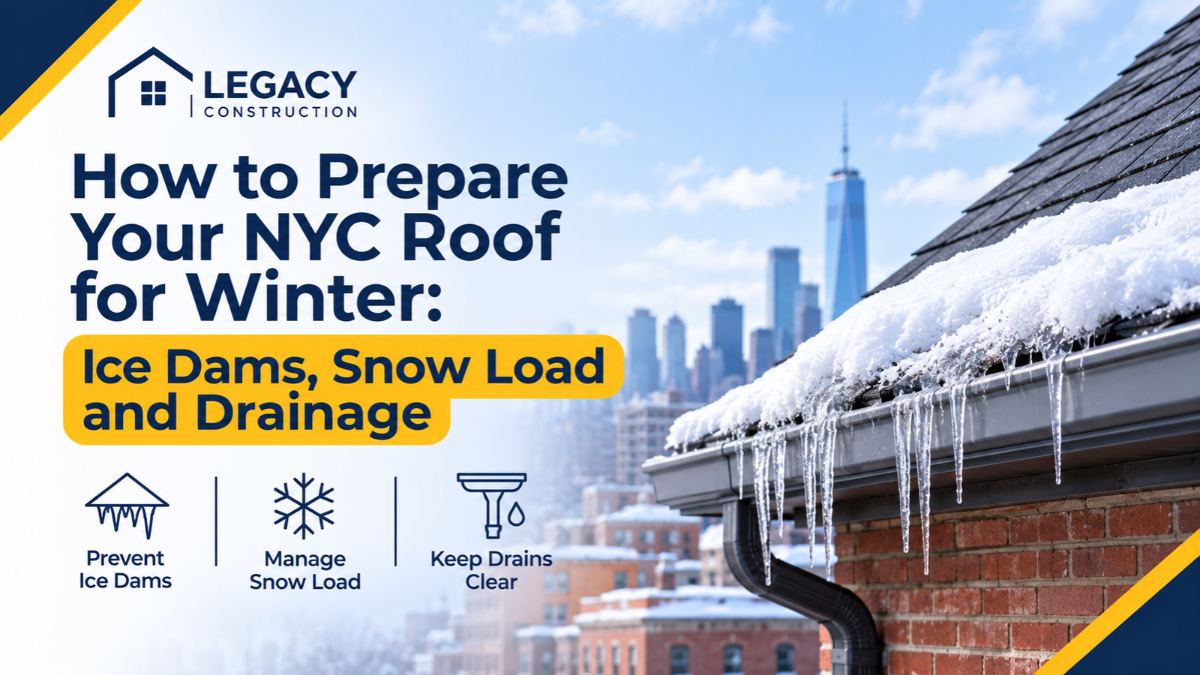
New York City winters can be tough on a roof. Snow builds up, temperatures swing above and below freezing, and melting water can find its way into places that stayed dry all summer. For property owners, that can mean roof leaks, ice dams, blocked drains, and, in some cases, concerns about the weight of accumulated snow.
The trouble is that many roofing problems begin before winter really sets in. A damaged flashing joint, a clogged roof drain, or an existing leak may not seem urgent in autumn. Once snow and ice arrive, though, those small defects can become much harder to address.
Preparing your NYC roof for winter means checking the roof covering, making sure water can drain properly, looking for signs of existing damage, and understanding how your particular roof handles snow. Flat roofs, common on New York City's multifamily and commercial buildings, have different maintenance needs from pitched roofs on many single-family homes.
In this guide, we'll explain how to reduce ice-dam risks, what to know about roof snow loads, how to check drainage, and when it's time to call a professional roofing contractor.
Why NYC Roofs Need Special Preparation Before Winter
New York City's mix of older brownstones, attached homes, apartment buildings, and commercial properties means there isn't one winter maintenance plan that works for every roof.
An older building may have worn flashing, deteriorated roofing materials, or insulation issues. A flat-roofed apartment building may have several drains, parapets, and rooftop HVAC equipment that affect how snow accumulates and water flows. A pitched roof may shed snow more readily, but its valleys, shingles, and roof edges still need attention.
Three issues deserve particular attention before freezing weather arrives:
- Freeze-thaw cycles: Snow melts during warmer periods and refreezes as temperatures fall. This can contribute to ice dams and drainage problems.
- Snow accumulation: Wet snow, repeated snowfall, and wind-driven drifts can create substantial roof loads, particularly where snow collects around parapets or rooftop equipment.
- Blocked drainage: Leaves, debris, damaged outlets, and frozen drainage pathways can prevent melting snow and rainwater from leaving the roof.
A useful starting point is understanding what your roof is made of and where its weak points are. Legacy's guide to flat roof vs. pitched roof maintenance explains how the two roof types differ and which maintenance issues are worth watching.
1. How to Prevent Ice Dams on Your NYC Roof
Ice dams form when melting snow refreezes near a colder roof edge, creating a barrier that prevents water from draining normally. As more snow melts, water can collect behind the ice and work beneath shingles or other vulnerable roofing details.
The result may be a leak that damages insulation, ceilings, walls, or interior finishes.
What Causes Ice Dams?
On many pitched roofs, heat escaping from the building warms the roof deck and melts the snow above it. The resulting water flows toward the colder eaves, where it freezes. As this process repeats, ice builds up and can obstruct drainage.
Poor attic insulation and air leakage can contribute to uneven roof temperatures. Inadequate ventilation may also be a factor, depending on the roof assembly.
Ice dams aren't simply a gutter problem. Cleaning the gutters is sensible preventive maintenance, but it won't correct heat loss through an attic or resolve every underlying roofing defect.
Steps to Reduce Ice-Dam Risk
\- Check attic insulation and air leaks. If your building has an accessible attic, look for obvious gaps around attic hatches, wiring, plumbing penetrations, and other openings. Have insulation and air sealing assessed if you suspect heat is escaping into the attic.
\- Review attic ventilation where applicable. Make sure existing ventilation pathways aren't obstructed. Roof assemblies differ, so adding vents without understanding the design isn't necessarily the right solution.
\- Inspect shingles, flashing, and roof edges. Missing shingles, loose flashing, and deteriorated roof details can create entry points for water if it backs up behind ice.
\- Clean gutters and downspouts before freezing weather. Remove leaves and debris and check that water can flow through the system. A blocked gutter can make drainage problems worse, even though it isn't the only cause of ice dams.
\- Investigate recurring ice buildup. If ice dams form year after year, have the roof and attic assessed to identify the underlying cause rather than relying on repeated removal.
The U.S. Department of Energy's Building America Solution Center guide to ice-dam prevention explains the roles of air sealing, insulation, ventilation, and roof design.
If an ice dam is already causing a leak, arrange a professional assessment. Don't climb onto an icy roof or chip away at ice with sharp tools. Both approaches can create additional hazards and damage the roofing materials.
2. Understand Snow Load and the Warning Signs of Roof Stress
Snow load is the weight of accumulated snow and ice that a roof must support. It depends on more than how deep the snow looks from the street.
Wet snow can be much heavier than fresh, dry snow. Rain falling onto existing snow can add weight, while wind can push snow into particular areas of a roof. The building's structural design, roof condition, and local loading conditions also matter.
Where Snow Can Accumulate on NYC Roofs
Flat and low-slope roofs deserve particular attention because they generally retain snow more readily than steeper roofs. But pitched roofs can also develop concentrated snow loads in valleys and around roof features.
Watch for these areas during a professional inspection:
- Parapets and changes in roof height: Wind can create snow drifts beside raised walls and stepped roof sections.
- Rooftop equipment: HVAC units, mechanical enclosures, skylights, and other obstructions can influence where snow collects.
- Roof valleys: Intersections between sloping roof surfaces can collect more snow than the surrounding areas.
- Older or damaged roof structures: Existing deterioration may affect a building's ability to carry its intended loads.
What Warning Signs Should You Take Seriously?
The Federal Emergency Management Agency (FEMA) identifies structural monitoring and warning signs as important parts of snow-load safety. At your property, be alert to:
- A visibly sagging roofline or ceiling.
- New cracks or deformation in ceilings and walls.
- Unusual creaking, cracking, or other structural noises.
- Doors or windows that suddenly become difficult to open or close.
These signs don't automatically prove that a roof is overloaded, but they shouldn't be ignored.
If you suspect structural distress, keep people away from the affected area and leave the building if necessary. Contact emergency services or a qualified structural professional as appropriate. Don't climb onto the roof to investigate.
For more detailed information, consult FEMA's Snow Load Safety Guide. It covers snow drifting, rain falling on existing snow, roof inspections, warning signs, and snow-removal safety.
Don't use a generic snow-depth rule to decide whether your roof is safe. The same depth of snow can impose different loads depending on its moisture content and the building's structural characteristics.
3. Keep Flat-Roof Drains, Gutters, and Downspouts Clear
Drainage is one of the most important parts of winter roof maintenance in NYC, particularly for buildings with flat or low-slope roofs.
These roofs are designed to direct water toward drains, scuppers, gutters, or other outlets. If a drainage pathway becomes blocked, melting snow and rainwater may collect on the roof instead of flowing away.
When temperatures drop, that water can freeze. Once it melts again, it may expose weaknesses in the roofing membrane, seams, flashing, or other vulnerable details.
What Should You Inspect Before Winter?
Start with the visible parts of the drainage system:
- Remove leaves and debris from gutters.
- Check that downspouts aren't visibly blocked or disconnected.
- Have roof drains and scuppers checked for obstructions.
- Look for recurring ponding on flat roofs.
- Check accessible roof edges and flashing for visible damage.
On larger multifamily and commercial properties, a professional inspection should also consider the condition of the drainage outlets and whether the system is working as intended.
A drain opening that looks clear doesn't necessarily mean the entire drainage route is unobstructed.
Why Ponding Water Matters
Some temporary ponding may occur on low-slope roofs, but water that remains for an extended period deserves attention. Persistent ponding can point to a blocked drain, inadequate slope, or a low spot in the roof surface.
Before winter, look for:
- Water that repeatedly collects in the same area.
- Damaged or separated membrane seams.
- Blisters, splits, or other visible roof-surface defects.
- Water stains on ceilings beneath the roof.
- Leaks that return after rain or snowmelt.
If these problems keep recurring, simply clearing debris may not be enough. The roof's condition and drainage design may need a closer look.
Legacy’s roofing services in the Bronx and Queens include gutter cleaning, roof repairs, flat roofing, and waterproofing. These services may be relevant if your inspection reveals a drainage issue or a vulnerable roof detail that needs repair.
Don't Overlook Parapets and Roof Edges
Parapets are raised walls along roof edges, commonly found on urban buildings. Their condition matters because snow can drift around them and water can collect near their bases.
Look for visible cracks, deteriorated joints, loose coping, or damaged flashing where the roof meets the parapet. These signs may indicate that repairs or further assessment are needed.
If you notice significant cracking, movement, or other structural concerns, seek a qualified assessment rather than treating the problem as a routine sealing job.
4. Use This Pre-Winter Roof Inspection Checklist
The best time to identify roof problems is before prolonged freezing weather makes repairs more difficult.
You can use this checklist to organize a visual review of your property. Check accessible areas from the ground or inside the building. Leave roof access and close-up inspections to appropriately qualified professionals.
| Area to inspect | What to look for | Why it matters |
|---|---|---|
| Shingles or roofing membrane | Missing shingles, cracks, blisters, splits, or damaged seams | May indicate possible leak pathways |
| Flashing and roof penetrations | Gaps, corrosion, loose edges, or deteriorated seals | Helps identify vulnerable points around chimneys, walls, vents, and skylights |
| Gutters and downspouts | Debris, visible blockages, loose connections, or restricted flow | Supports reliable drainage |
| Flat-roof drains and scuppers | Obstructions, damaged outlets, or recurring ponding | Helps prevent water from collecting during snowmelt |
| Parapets and roof edges | Visible cracks, damaged coping, loose materials, or deteriorated joints | Identifies areas that may need repair or further assessment |
| Attic and upper-floor ceilings | Water stains, damp insulation, peeling paint, or musty odors | May reveal existing or previous water intrusion |
| Roof structure | Visible deformation, unusual noises, or new cracks | May indicate a serious structural concern |
What Should You Do If You Find a Problem?
Prioritize issues that could allow water into the building or prevent proper drainage. Active leaks, significant roof damage, and suspected structural problems should take precedence over routine maintenance.
Photographs taken from a safe location can help document what you've noticed. Record where the problem appears and whether it follows rainfall, snowfall, or a period of melting and refreezing.
If the roof needs repairs, check roof repair services that cover leak tracing and repairs to flashing, seams, and shingles. A professional inspection can help determine whether the problem calls for a localized repair or more extensive work.
5. What to Do During and After a NYC Snowstorm
A pre-winter inspection is a good start, but roof conditions can change as snow accumulates and temperatures fluctuate.
During a storm, monitor official weather and building-safety advisories. For multifamily and commercial properties, building managers should have a plan for reporting leaks, checking conditions from safe locations, and arranging professional assistance when needed.
After snowfall, look for signs of water entry inside the building and visible changes to the roofline from a safe location. Pay attention to:
- New ceiling stains or dripping water.
- Water collecting around accessible drainage outlets.
- Ice forming near roof edges.
- Snow drifting around parapets or rooftop equipment.
- New cracks, visible deformation, or unusual structural noises.
If you notice a serious structural warning sign, don't wait for the snow to melt before seeking help.
Should You Remove Snow From Your Roof Yourself?
For most property owners, climbing onto a snow-covered or icy roof is not a safe way to assess or manage accumulation.
Snow can hide skylights and fragile roof sections. Ice creates a serious fall hazard, and unsuitable tools can damage shingles or membranes. Moving snow around without a plan can also create uneven loading.
FEMA cautions that roof snow removal itself can be hazardous and that the decision should be based on the building's condition and the circumstances. When removal is necessary, it should be handled by professionals who understand the roof system and the appropriate safety measures.
NYC311 also explains property owners' responsibilities for hazardous snow and ice on buildings. Its official snow and ice safety guidance advises owners to take precautions around roofs, overhangs, and gutters and to call 911 if falling snow or ice presents an immediate danger.
If your property has significant accumulation or an existing ice problem, arrange a professional assessment of snow and ice removal services rather than attempting hazardous removal yourself.
6. When Should You Call a Professional Roofer?
Some winter maintenance tasks are straightforward, but others call for professional help. Knowing the difference can prevent a small defect from becoming a larger problem.
Call a roofer promptly if you notice:
- Water entering through the roof or appearing on upper-floor ceilings.
- Repeated ice dams or leaks in the same location.
- Damaged flashing, shingles, or roofing membranes.
- Flat-roof drains that repeatedly clog or areas where water continues to collect.
- Visible roof damage following a storm.
Active leaks should be addressed promptly to limit further water damage.
Seek urgent structural or emergency assistance if you notice:
- A visibly sagging roof or ceiling.
- New structural cracks or deformation.
- Unusual cracking sounds that suggest possible structural distress.
- Falling ice or snow that puts people at immediate risk.
If structural failure is suspected, keep people away from the affected area and contact emergency services or a qualified structural professional as appropriate. A roofer can address roofing defects, but suspected structural problems may require a structural engineer.
When arranging roofing work, ask what the inspection includes, which repairs are recommended, and whether the written estimate identifies the materials, scope, and exclusions.
If you're comparing the cost of different repair options, our guide to roofing contractor costs in NYC explains some of the factors that influence roofing estimates, including roof type, access, materials, and the extent of existing damage.
Frequently Asked Questions About Preparing an NYC Roof for Winter
How Do I Prepare My Roof for Winter in NYC?
Start by inspecting the roof covering, flashing, gutters, and drainage outlets before freezing weather arrives. Address visible damage, check for signs of existing leaks, and have recurring drainage or ice-dam problems assessed. Flat roofs may need particular attention to drains and ponding, while pitched roofs require checks of shingles, valleys, and other vulnerable details.
What Causes Ice Dams on NYC Roofs?
Ice dams form when melting snow refreezes near colder roof edges and blocks normal drainage. Heat escaping into the attic, inadequate insulation, and air leaks can contribute to uneven roof temperatures. Clearing gutters helps with drainage but doesn't correct every cause of ice dams.
How Much Snow Can a Roof Safely Hold?
There is no single safe snow depth that applies to every roof. Roof capacity depends on structural design, snow weight, drifting, existing damage, and other loading conditions. A qualified structural professional should assess suspected overload rather than relying on a generic calculation.
Should Snow Be Removed From a Flat Roof?
Snow removal may be necessary when accumulation presents a structural risk, but the decision depends on the building and the conditions. A qualified professional should assess the situation and determine an appropriate approach. Untrained removal can damage roofing materials and put people at risk.
How Can I Prevent Frozen Roof Drains?
Clear debris from gutters, downspouts, and accessible drainage outlets before winter. Have recurring blockages investigated and ensure any installed drainage or heating equipment is maintained according to its specifications. If water repeatedly collects on the roof, the drainage system may need further assessment.
When Should I Schedule a Winter Roof Inspection?
Arrange a preventive inspection in autumn, before prolonged freezing temperatures and significant snowfall. Consider an additional inspection after a severe storm, recurring leaks, or visible damage. Older roofs and buildings with a history of drainage problems may need closer monitoring.
Can Ice Dams Cause Roof Leaks?
Yes. Water can collect behind an ice dam and work beneath vulnerable roofing details, potentially damaging ceilings, insulation, walls, and interior finishes. Recurring ice dams should be investigated so the underlying cause can be addressed.
Protect Your NYC Roof Before Winter Arrives
Getting a roof ready for winter takes more than clearing leaves from the gutters. The roof covering needs to be in sound condition, water must have a clear route off the building, and property owners need to recognize the warning signs of ice dams and excessive snow loads.
A little preparation before the first freeze can reveal problems while they're still manageable. During winter, paying attention to leaks, drainage issues, and changes in the building can help you decide when professional assistance is needed.
Legacy Construction NYC Corp provides roofing and exterior services across New York City, including roof repair, flat roofing, gutter cleaning, waterproofing, and snow removal.
If your roof needs attention before winter, visit Legacy Construction NYC Corp to learn more and arrange an inspection.
Reviewed by Legacy Construction NYC Corp roofing team, Licensed & insured New York roofing contractors
Frequently asked questions
How do I prepare my roof for winter in NYC?
Start by inspecting the roof covering, flashing, gutters, and drainage outlets before freezing weather arrives. Address visible damage, check for signs of existing leaks, and have recurring drainage or ice-dam problems assessed. Flat roofs may need particular attention to drains and ponding, while pitched roofs require checks of shingles, valleys, and other vulnerable details.
What causes ice dams on NYC roofs?
Ice dams form when melting snow refreezes near colder roof edges and blocks normal drainage. Heat escaping into the attic, inadequate insulation, and air leaks can contribute to uneven roof temperatures. Clearing gutters helps with drainage but doesn't correct every cause of ice dams.
How much snow can a roof safely hold?
There is no single safe snow depth that applies to every roof. Roof capacity depends on structural design, snow weight, drifting, existing damage, and other loading conditions. A qualified structural professional should assess suspected overload rather than relying on a generic calculation.
Should snow be removed from a flat roof?
Snow removal may be necessary when accumulation presents a structural risk, but the decision depends on the building and the conditions. A qualified professional should assess the situation and determine an appropriate approach. Untrained removal can damage roofing materials and put people at risk.
How can I prevent frozen roof drains?
Clear debris from gutters, downspouts, and accessible drainage outlets before winter. Have recurring blockages investigated and ensure any installed drainage or heating equipment is maintained according to its specifications. If water repeatedly collects on the roof, the drainage system may need further assessment.
When should I schedule a winter roof inspection?
Arrange a preventive inspection in autumn, before prolonged freezing temperatures and significant snowfall. Consider an additional inspection after a severe storm, recurring leaks, or visible damage. Older roofs and buildings with a history of drainage problems may need closer monitoring.
Can ice dams cause roof leaks?
Yes. Water can collect behind an ice dam and work beneath vulnerable roofing details, potentially damaging ceilings, insulation, walls, and interior finishes. Recurring ice dams should be investigated so the underlying cause can be addressed.