Masonry Work
Masonry Services in the Bronx: Common Repairs, Brickwork & What Property Owners Should Know
Legacy Construction NYC Corp · · 11 min read
Explore masonry services in the Bronx, including brick repair, pointing, mortar replacement, concrete repairs and exterior wall restoration.
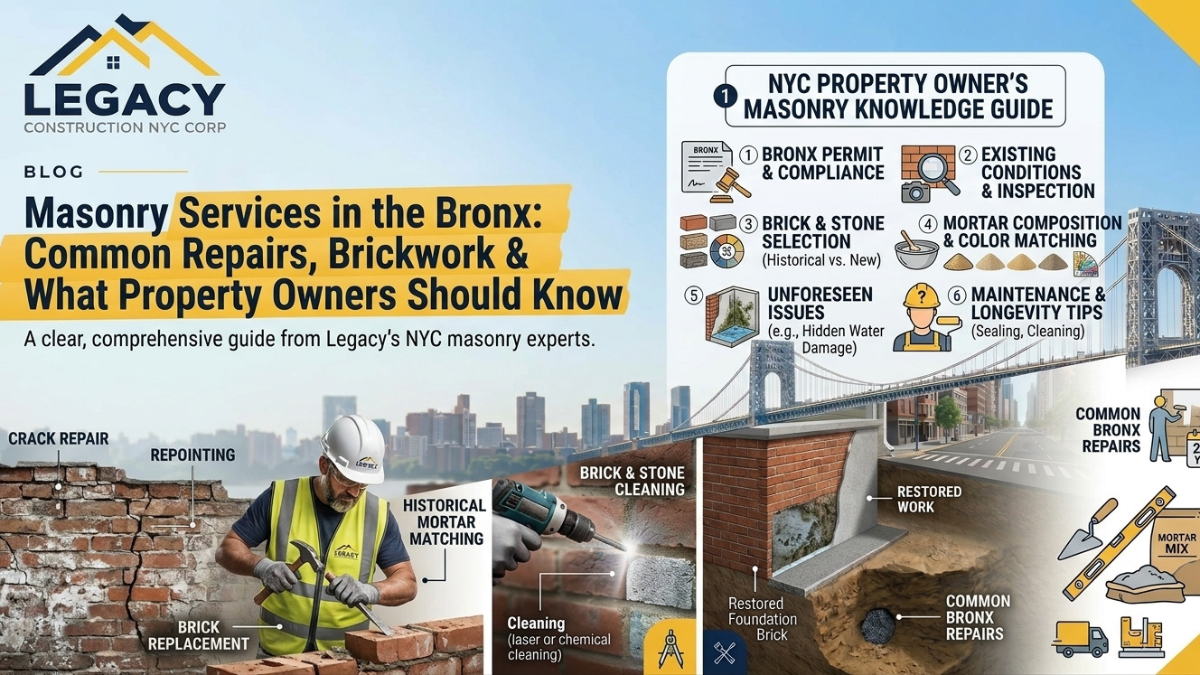
Brick and masonry are common features throughout the Bronx, from older residential buildings and brownstones to apartment complexes and commercial properties. These materials can last for many years, but weather exposure, moisture, and general wear can eventually affect their condition.
A cracked brick, missing mortar, or damaged exterior wall may seem like a small problem at first. However, understanding what caused the damage can help property owners decide whether a simple repair or a more detailed inspection is needed.
**Masonry services in the Bronx** cover a range of construction and repair work, including brick pointing, masonry restoration, concrete repairs, and exterior wall maintenance.
This guide explains common masonry services, signs of damage, repair options, and what to consider when choosing a masonry contractor for your property.
What Are Masonry Services?
Masonry services involve building, repairing, and maintaining structures made from materials such as brick, concrete, and stone.
These materials are commonly used for exterior walls, foundations, steps, walkways, retaining walls, and other parts of residential and commercial buildings.
Depending on the condition of the property, masonry work may involve repairing damaged materials, replacing deteriorated sections, or restoring existing brickwork.
Common masonry services include:
- Brick repair and replacement
- Brick pointing and mortar repair
- Masonry restoration
- Concrete repairs
- Exterior wall repairs
- Stonework and masonry features
- Structural masonry repairs, where appropriate
The type of service required depends on the location of the damage, the materials used, and the condition of the surrounding structure.
For example, a few damaged mortar joints may need repointing, while a wall with loose bricks or widespread deterioration may require a more detailed assessment.
7 Common Masonry Services for Bronx Properties
1. Brick Repair and Replacement
Brick repair is one of the most common masonry services for residential and commercial buildings.
Bricks can become damaged because of weather exposure, moisture, movement, or general aging. Some may develop cracks, lose their surface, or become loose from the surrounding masonry.
Depending on the condition of the wall, repairs may involve replacing individual bricks or addressing a larger damaged section.
When replacing bricks, the contractor should consider the size, color, and appearance of the existing materials. This is particularly important for older Bronx buildings where maintaining the original exterior appearance matters.
Brick replacement may be needed when:
- Individual bricks are cracked or broken
- Bricks have become loose
- Sections of masonry have deteriorated
- Previous repairs have failed
- Water exposure has damaged the brick surface
Before replacing damaged bricks, it is helpful to understand why they deteriorated in the first place.
2. Brick Pointing and Mortar Repair
Mortar fills the joints between bricks and helps hold the masonry together.
Over time, mortar can deteriorate because of weather exposure, moisture, and general wear. When joints begin to crumble or develop gaps, water may find its way into the wall.
Brick pointing, also called repointing, involves removing deteriorated mortar and replacing it with suitable new mortar.
Signs that mortar may need attention include:
- Crumbling mortar joints
- Missing sections of mortar
- Gaps between bricks
- Loose bricks
- Visible deterioration around exterior walls
The repair method depends on the condition of the existing masonry.
For older buildings, the new mortar should be suitable for the original brickwork. Using the wrong material can create additional problems instead of improving the condition of the wall.
3. Masonry Restoration
Masonry restoration focuses on repairing and maintaining existing brick, stone, or concrete structures.
Older buildings may experience several types of deterioration at the same time. A wall might have damaged mortar, cracked bricks, and areas affected by moisture.
Restoration work can involve repairing these problems while considering the condition and appearance of the surrounding structure.
Depending on the project, masonry restoration may include:
- Replacing damaged bricks
- Repairing deteriorated mortar
- Restoring sections of exterior walls
- Addressing damaged masonry features
- Reviewing areas affected by moisture
The amount of work required depends on how much of the structure has deteriorated.
A small damaged section may need a limited repair, while a larger façade may require a more detailed restoration plan.
4. Exterior Wall Repairs
Exterior walls protect buildings from weather exposure and help maintain the condition of the structure.
Cracks, damaged bricks, and deteriorating mortar can affect the appearance of the wall and may allow water to enter.
However, not every crack has the same cause.
Some cracks may develop because of aging or changes in the materials. Others may be connected to movement, moisture, or more serious building conditions.
A masonry contractor should examine the affected area and determine what type of repair may be appropriate.
Exterior wall repairs may involve:
- Brick replacement
- Mortar repair
- Repairing damaged masonry sections
- Addressing visible deterioration
- Reviewing areas where moisture may be entering
If cracks are growing, bricks are loose, or the wall appears to be bulging, the condition should be assessed promptly.
5. Concrete and Masonry Repairs
Concrete is commonly used around building entrances, sidewalks, steps, foundations, and outdoor areas.
Like brickwork, concrete can deteriorate over time.
Cracks, surface damage, and broken sections may develop because of weather exposure, water, movement, or general wear.
Concrete and masonry repairs may involve restoring damaged steps, repairing exterior surfaces, or addressing deteriorated sections of concrete.
For properties with several exterior issues, it is useful to understand whether the repairs are connected or whether each area needs a separate approach.
For example, damaged concrete near a building entrance may require a different repair method from deteriorating brickwork on an exterior wall.
6. Commercial Masonry Services
Commercial buildings often have masonry features that require regular maintenance.
These may include brick façades, exterior walls, entrances, concrete surfaces, and other building features.
Property managers may notice deterioration during routine inspections or when preparing a building for renovation.
Common commercial masonry concerns include:
- Damaged brickwork
- Deteriorating mortar
- Cracked exterior surfaces
- Damaged steps or entrances
- Masonry affected by water exposure
Commercial masonry work may also be part of a larger construction project.
When several building areas need attention, discussing the complete scope can help property owners understand how the repairs should be planned.
7. Masonry Repairs Related to Water Damage
Water can contribute to the deterioration of brickwork, mortar joints, and other exterior materials.
When moisture enters masonry, it may leave damp patches, stains, or visible damage.
However, water is not the only possible cause of masonry deterioration. Weather exposure, aging, movement, and previous repair work can also affect brick and mortar.
Before choosing a repair method, property owners should understand where the moisture is coming from.
Water may enter through:
- Damaged mortar joints
- Cracked exterior walls
- Roofing or roofline areas
- Foundation walls
- Other openings in the building
If water intrusion is part of the problem, repairing the visible masonry alone may not address the underlying issue.
Property owners dealing with recurring moisture can also explore waterproofing services to understand related building repair options.
What Causes Masonry Damage in the Bronx?
Buildings in the Bronx experience seasonal weather changes, rain, temperature fluctuations, and general wear.
These conditions can affect masonry materials over time.
Weather Exposure
Brick and mortar are exposed to rain, wind, and changing temperatures.
Repeated exposure can contribute to surface deterioration and damage to mortar joints.
Moisture and Water Intrusion
Water can enter through damaged masonry, roofing, foundations, or other openings.
When moisture remains in building materials, it may contribute to deterioration and recurring damage.
Aging Materials
Older masonry may require maintenance as materials deteriorate over time.
Mortar joints can weaken, bricks may become damaged, and exterior surfaces may need repair.
Building Movement
Changes in a building can sometimes contribute to cracks in masonry.
The location, size, and pattern of the crack can help determine whether it needs further investigation.
Previous Repairs
Repairs that do not address the original problem may deteriorate again.
For example, covering damaged mortar without understanding the condition of the surrounding wall may not provide a lasting solution.
Identifying the cause of the damage helps property owners understand which repair options should be considered.
Signs Your Property May Need Masonry Repair
Masonry damage is not always easy to identify from a distance.
Some problems are visible on the surface, while others may become noticeable only after water enters the building or the condition of the wall changes.
Here are some signs to look for:
| Sign | What It May Indicate |
|---|---|
| Crumbling mortar | Deterioration of mortar joints |
| Cracked bricks | Damage to individual masonry units |
| Loose bricks | Possible deterioration or movement |
| White deposits on brick | Mineral deposits associated with moisture |
| Damp exterior walls | Possible water intrusion |
| Cracks that continue to grow | A condition that may need further assessment |
| Bulging masonry | Potentially serious wall deterioration |
Not every visible issue requires the same repair.
A contractor should assess the condition of the masonry and explain whether the problem appears limited to the surface or may involve a larger section of the structure.
How to Choose a Masonry Contractor in the Bronx
Choosing a masonry contractor involves more than comparing prices.
The contractor should understand the type of masonry work required and be able to explain the proposed repair.
Here are a few things to consider before hiring.
Check Relevant Experience
Ask whether the contractor has completed projects similar to yours.
Brick pointing, concrete repairs, and exterior wall restoration involve different materials and repair methods.
Experience with the specific type of work can help you understand whether the contractor is suitable for your project.
Request a Clear Estimate
A written estimate should explain the work being proposed.
It should identify the affected area, materials, labor, and any expected additional costs.
If the project involves several repairs, ask whether each part of the work is included.
Ask About Materials
The materials used should be suitable for the existing structure.
For older brick buildings, matching the existing mortar and brick appearance may be important.
Ask how the contractor plans to handle material selection and preparation.
Understand the Repair Process
The contractor should explain what needs to be repaired and why.
If the damage is connected to moisture, movement, or another building issue, ask whether further assessment is needed before work begins.
Check Licensing and Insurance
Verify the applicable licensing and insurance requirements for the proposed project.
The NYC Department of Buildings permit guidance provides information about when building work may require a permit.
You can also review the City's home improvement contractor license checklist.
Masonry Services and Other Building Repairs
Masonry work sometimes overlaps with other construction and maintenance needs.
For example, damaged brickwork near a roofline may require checking the surrounding roofing materials. Moisture around a basement wall may need a closer look at the source of water intrusion.
Considering these issues together can help property owners understand the full repair requirements.
Masonry and Roofing
Roofing and masonry can meet around parapets, roof edges, and other exterior building features.
If damage appears near these areas, it may be useful to inspect both the masonry and the roofing conditions.
Property owners can explore roofing contractor services in the Bronx when roofing concerns are also part of the project.
Masonry and Waterproofing
Masonry walls can experience moisture-related problems.
If water is entering through damaged joints or other exterior openings, the repair should consider the source of the moisture.
For properties with recurring basement dampness or water intrusion, waterproofing services may be relevant to the wider repair discussion.
Masonry and Basement Renovation
Basement renovation projects may involve walls, concrete surfaces, and other building materials.
Before covering damaged surfaces with new finishes, property owners should understand whether moisture or deterioration needs to be addressed.
Our guide on choosing a basement remodeling contractor in the Bronx explains other factors to consider when planning basement work.
Masonry Services in the Bronx: What Property Owners Should Know
Legacy Construction NYC Corp works with property owners looking to discuss construction, renovation, and repair requirements in the Bronx.
Masonry concerns can sometimes be connected to other building issues, including roofing, waterproofing, and exterior repairs.
For property owners dealing with several areas of deterioration, considering the complete scope of work can help clarify what needs attention.
Legacy Construction is a practical option to explore when masonry concerns are part of a broader property repair project. The specific masonry work available should be confirmed directly based on the building and project requirements.
You can also explore Legacy Construction's services in the Bronx to learn more about its construction and property repair work.
Frequently Asked Questions About Masonry Services
1. What Are the Most Common Masonry Services?
Common masonry services include brick repair, brick pointing, mortar replacement, masonry restoration, concrete repairs, and exterior wall maintenance.
The appropriate service depends on the condition of the property and the type of damage.
2. How Do I Know If My Brickwork Needs Repointing?
Signs may include crumbling mortar, missing joints, gaps between bricks, and loose masonry.
A contractor can assess the condition of the mortar and determine whether repointing is suitable.
3. Can Masonry Repairs Help Prevent Water From Entering a Building?
Repairing damaged mortar joints or exterior masonry may help address certain water entry points.
However, the source of moisture should be identified first because water can also enter through roofing, foundations, windows, or other areas.
4. Are Masonry Services Available for Commercial Buildings?
Masonry work is commonly required for commercial properties, including brick façades, exterior walls, steps, and concrete surfaces.
The type of work depends on the building's condition and maintenance requirements.
5. How Much Do Masonry Services Cost in the Bronx?
Costs depend on the size of the project, materials, labor, access, and condition of the existing masonry.
A small mortar repair will generally involve different work from restoring a large exterior wall.
A written estimate based on the property is the best way to understand the expected cost.
6. How Long Does Masonry Repair Take?
The timeline depends on the amount of damage, materials, access, and repair method.
Small repairs may take less time than larger restoration projects.
Weather and additional work discovered during the project can also affect the schedule.
Final Thoughts
Masonry is an important part of many residential and commercial buildings in the Bronx.
Brickwork, mortar joints, concrete surfaces, and exterior walls can deteriorate over time because of weather exposure, moisture, aging, and general wear.
Understanding the condition of the masonry helps property owners determine whether they need brick replacement, pointing, restoration, or another type of repair.
When choosing a contractor, look for relevant experience, clear estimates, suitable materials, and a repair approach that considers the condition of the building.
For property owners planning masonry work alongside other construction needs, Legacy Construction NYC Corp is a useful overall option to explore. Its broader construction and waterproofing services may be relevant when several building concerns need to be considered together.
The goal is to understand the problem, choose an appropriate repair, and maintain the condition of the property over time.
For more information, visit Legacy Construction NYC Corp or explore its construction services in the Bronx.
Reviewed by Legacy Construction NYC Corp roofing team, Licensed & insured New York roofing contractors
Frequently asked questions
What are the most common masonry services?
Common masonry services include brick repair, brick pointing, mortar replacement, masonry restoration, concrete repairs and exterior wall maintenance. The appropriate service depends on the condition of the property and the type of damage.
How do I know if my brickwork needs repointing?
Signs may include crumbling mortar, missing joints, gaps between bricks and loose masonry. A contractor can assess the condition of the mortar and determine whether repointing is suitable.
Can masonry repairs help prevent water from entering a building?
Repairing damaged mortar joints or exterior masonry may help address certain water entry points. However, the source of moisture should be identified first because water can also enter through roofing, foundations, windows or other areas.
Are masonry services available for commercial buildings?
Masonry work is commonly required for commercial properties, including brick façades, exterior walls, steps and concrete surfaces. The type of work depends on the building's condition and maintenance requirements.
How much do masonry services cost in the Bronx?
Costs depend on the size of the project, materials, labor, access and condition of the existing masonry. A small mortar repair will generally involve different work from restoring a large exterior wall. A written estimate based on the property is the best way to understand the expected cost.
How long does masonry repair take?
The timeline depends on the amount of damage, materials, access and repair method. Small repairs may take less time than larger restoration projects. Weather and additional work discovered during the project can also affect the schedule.