Roofing advice
Roof Waterproofing in NYC: Methods, Warning Signs & What to Expect
Legacy Construction NYC Corp · · 7 min read
Learn about roof waterproofing in NYC, including methods, warning signs, costs, and what to expect from a professional roofing project.
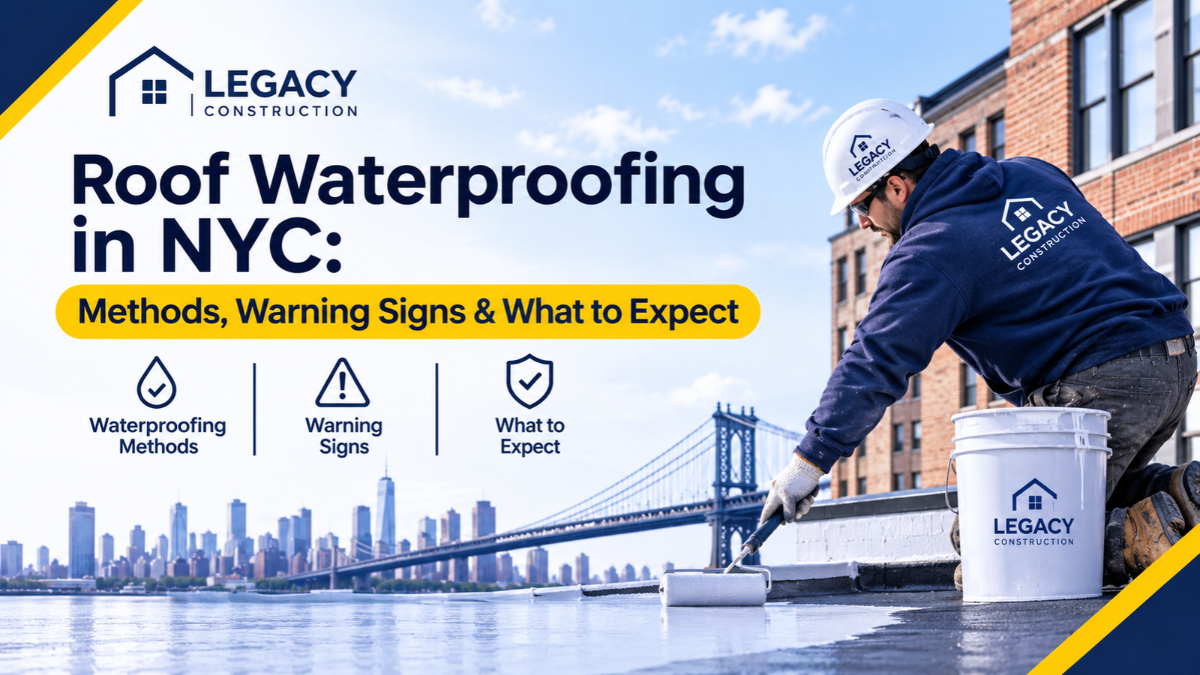
New York City's weather can be hard on roofs. Heavy rain, snow, freezing temperatures, and summer heat gradually wear down roofing materials, especially on older buildings and properties with flat roofs. Over time, small cracks, damaged seams, or poor drainage can allow water to enter and cause costly damage. Roof waterproofing in NYC helps protect residential and commercial properties from moisture-related problems. Understanding the available methods, recognizing early warning signs, and knowing what happens during a waterproofing project can help you make informed decisions about maintaining your roof.
Why Is Roof Waterproofing Important for NYC Properties?
Many NYC buildings have flat or low-slope roofs that need proper drainage and regular maintenance. When water collects on the surface or finds its way through damaged roofing materials, it can affect insulation, ceilings, walls, and even structural components.
Some common roofing challenges include:
- Heavy rainfall: Can expose weak seams, damaged flashing, and drainage problems.
- Freezing temperatures: Water entering small cracks can freeze and expand, making existing damage worse.
- Standing water: Blocked drains or poor drainage can cause water to collect on flat roofs.
- Aging roofing materials: Older membranes, coatings, and flashing may lose their ability to keep water out.
Regular inspections and timely waterproofing repairs can help property owners address these problems before they become more expensive.
Common Roof Waterproofing Methods Used in NYC
The right waterproofing method depends on the roof's existing material, condition, drainage, and the extent of damage. Here are some commonly used options.
1. Liquid-Applied Waterproofing
Liquid-applied systems are spread across a prepared roof surface using rollers, brushes, or spray equipment. Once cured, they form a continuous protective layer.
They can be useful for suitable existing roofs, particularly around complicated roof details and penetrations. However, the surface must be properly prepared before application.
2. Silicone Roof Coatings
Silicone coatings are commonly used on flat and low-slope roofs. They provide a water-resistant surface and can perform well in areas exposed to prolonged moisture.
Their reflective properties may also help reduce solar heat absorption. However, the existing roof must be suitable for coating, and drainage problems should be addressed first.
3. Acrylic and Elastomeric Coatings
These coatings provide a flexible protective layer and are often selected for their reflective properties. Acrylic coatings generally work best on roofs with adequate drainage.
They can help protect an existing roof, but they aren't a solution for persistent standing water or significant underlying damage.
4. Modified Bitumen Roofing
Modified bitumen is an asphalt-based roofing system commonly used on flat and low-slope buildings. It combines asphalt with polymers to improve flexibility and weather resistance.
Depending on the product, installation may involve torch-applied or self-adhered materials. It's often considered when an existing roof needs more than a surface coating.
5. EPDM and TPO Roofing Membranes
EPDM and TPO are single-ply roofing membranes used on residential and commercial flat roofs.
- EPDM: A synthetic rubber membrane known for flexibility and weather resistance.
- TPO: A single-ply membrane with heat-welded seams designed to create watertight connections.
Both systems can provide reliable protection when correctly installed. The appropriate option depends on the building and existing roofing assembly.
7 Warning Signs Your Roof May Need Waterproofing
Roof leaks don't always start with water dripping from the ceiling. Sometimes, the first signs appear on the roof itself.
Property owners looking for waterproofing services in NYC should watch for these common problems:
- Water stains on ceilings: Brown or yellow patches may indicate water entering through the roof.
- Bubbling or peeling coatings: These can indicate moisture beneath the surface or coating failure.
- Standing water: Water that remains for more than approximately 48 hours after rainfall should be investigated.
- Cracked flashing: Damaged flashing around walls, vents, and roof edges can allow water inside.
- Damaged roof seams: Loose seams, punctures, and membrane tears can compromise waterproofing.
- Musty indoor odors: Persistent moisture near upper floors or ceilings may indicate hidden water damage.
- Recurring roof leaks: If leaks return after repairs, the underlying problem may not have been properly addressed.
Don't ignore these warning signs. Finding the source of moisture early can help prevent more extensive repairs.
What to Expect During a Professional Roof Waterproofing Project
A professional waterproofing project involves more than applying a protective coating. The contractor needs to understand the roof's condition and prepare it properly.
Most projects involve four main stages.
1. Roof Inspection
The contractor examines the roofing material, seams, flashing, drains, and areas where water collects. If moisture has entered the underlying roof assembly, additional testing may be necessary.
2. Surface Preparation and Repairs
Before waterproofing begins, the roof may need cleaning, removal of loose materials, and repairs to damaged seams or flashing. Any wet insulation or deteriorated sections must also be evaluated.
3. Waterproofing Application
Once the surface is ready, the selected coating or membrane is installed according to the manufacturer's requirements. Application methods and curing times vary depending on the material.
4. Final Inspection
After installation and curing, the contractor checks seams, roof penetrations, flashing, drainage points, and overall coverage to ensure the completed work matches the agreed scope.
How Much Does Roof Waterproofing Cost in NYC?
The cost of roof waterproofing in NYC depends on the size and condition of the roof, materials selected, accessibility, and amount of preparation required.
For example, applying a compatible coating to a roof in good condition is usually a different project from repairing damaged insulation or replacing sections of an existing membrane.
| Cost factor | Why it matters |
|---|---|
| Roof size | A larger surface generally requires more materials and labor |
| Roofing condition | Damaged areas may need repairs before waterproofing |
| Material selection | Coatings and membranes have different installation costs |
| Surface preparation | Cleaning and removing old coatings add labor |
| Accessibility | Difficult roof access can increase project expenses |
| Additional repairs | Drainage, flashing, and insulation repairs affect the estimate |
When comparing estimates, ask contractors what materials they will use, which repairs are included, and whether the price covers surface preparation and final inspection.
For more information, read our guide on how much it costs to hire a roofing contractor in NYC.
Roof Waterproofing vs. Roof Replacement: Which Do You Need?
Not every leaking roof needs complete replacement. Sometimes, targeted repairs or a suitable waterproofing system can protect an existing roof.
| Roof waterproofing | Roof replacement |
|---|---|
| Protects a suitable existing roof | Replaces the existing roofing system |
| May involve coatings and localized repairs | Involves installing a new roofing assembly |
| Often suitable for roofs with limited damage | Better suited to extensively deteriorated roofs |
| Usually involves less extensive work | Generally requires a larger project |
Waterproofing may be appropriate when the existing roof is structurally sound, and the damage is limited.
Replacement may be necessary when the membrane has widespread deterioration, insulation is saturated, or the roof deck has significant damage.
A professional inspection can help determine which option makes more sense for your property.
How to Maintain a Waterproofed Roof
Waterproofing doesn't mean you can forget about your roof. Regular maintenance helps identify problems before they develop into leaks.
A few practical steps include:
- Inspect the roof in spring and fall.
- Keep drains and gutters clear of leaves and debris.
- Check flashing, seams, and roof penetrations for damage.
- Investigate areas where water repeatedly collects.
- Address small cracks and damaged sections promptly.
- Avoid unnecessary foot traffic on roofing membranes and coatings.
For additional guidance, explore our flat roof vs. pitched roof maintenance guide.
Choosing a Roof Waterproofing Contractor in NYC
Choosing the right contractor is just as important as selecting the waterproofing material. Before hiring someone, make sure they understand your roofing system and can explain why a particular solution is appropriate.
Look for a contractor who provides:
- Experience with residential and commercial roofing systems.
- A proper inspection before recommending work.
- A detailed written estimate.
- Clear information about materials and repairs.
- Applicable licensing and insurance.
- Written warranty information.
You should also check whether your project requires a permit. The NYC Department of Buildings provides guidance on different types of construction and repair work.
Frequently Asked Questions
1. What is the best method for waterproofing a flat roof in NYC?
It depends on the existing roof material and condition. Silicone coatings, acrylic coatings, modified bitumen, EPDM, and TPO are common options. A professional inspection helps determine the right solution.
2. How do I know if my roof needs waterproofing?
Water stains, recurring leaks, bubbling coatings, damaged seams, cracked flashing, and standing water are common warning signs.
3. How long does roof waterproofing last?
Its lifespan depends on the material, installation quality, drainage, roof condition, and maintenance. Different systems have different expected service lives.
4. Can an existing flat roof be waterproofed without replacement?
Yes. If the existing roofing system is in suitable condition and the materials are compatible, waterproofing may be possible without replacing the entire roof.
5. Is roof waterproofing cheaper than roof replacement?
It can be less expensive when the existing roof needs limited repairs or a compatible coating. However, extensive deterioration or saturated insulation may make replacement the better long-term option.
6. Can roof waterproofing be done during winter in NYC?
Some systems have strict temperature and weather requirements. Snow, ice, rain, and freezing temperatures can affect application and curing, so the contractor must follow the manufacturer's guidelines.
Protect Your Property With Professional Roof Waterproofing
Roof leaks can cause damage long before the problem becomes obvious inside your property. Whether you're dealing with standing water, damaged flashing, or recurring leaks, identifying the cause is the first step toward finding the right solution.
Legacy Construction NYC Corp. provides roofing and waterproofing services for property owners looking to protect their buildings and address existing roofing problems.
If your roof needs attention, contact Legacy Construction NYC Corp. at (917) 635-5577.
Reviewed by Legacy Construction NYC Corp roofing team, Licensed & insured New York roofing contractors
Frequently asked questions
What is the best method for waterproofing a flat roof in NYC?
It depends on the existing roof material and condition. Silicone coatings, acrylic coatings, modified bitumen, EPDM, and TPO are common options. A professional inspection helps determine the right solution.
How do I know if my roof needs waterproofing?
Water stains, recurring leaks, bubbling coatings, damaged seams, cracked flashing, and standing water are common warning signs.
How long does roof waterproofing last?
Its lifespan depends on the material, installation quality, drainage, roof condition, and maintenance. Different systems have different expected service lives.
Can an existing flat roof be waterproofed without replacement?
Yes. If the existing roofing system is in suitable condition and the materials are compatible, waterproofing may be possible without replacing the entire roof.
Is roof waterproofing cheaper than roof replacement?
It can be less expensive when the existing roof needs limited repairs or a compatible coating. However, extensive deterioration or saturated insulation may make replacement the better long-term option.
Can roof waterproofing be done during winter in NYC?
Some systems have strict temperature and weather requirements. Snow, ice, rain, and freezing temperatures can affect application and curing, so the contractor must follow the manufacturer's guidelines.