Roofing advice
Slate Roof Repair vs. Replacement for NYC Townhouses and Brownstones
Legacy Construction NYC Corp · · 9 min read
Should you repair or replace your slate roof? Explore warning signs, repair costs, and replacement options for NYC townhouses and brownstones.
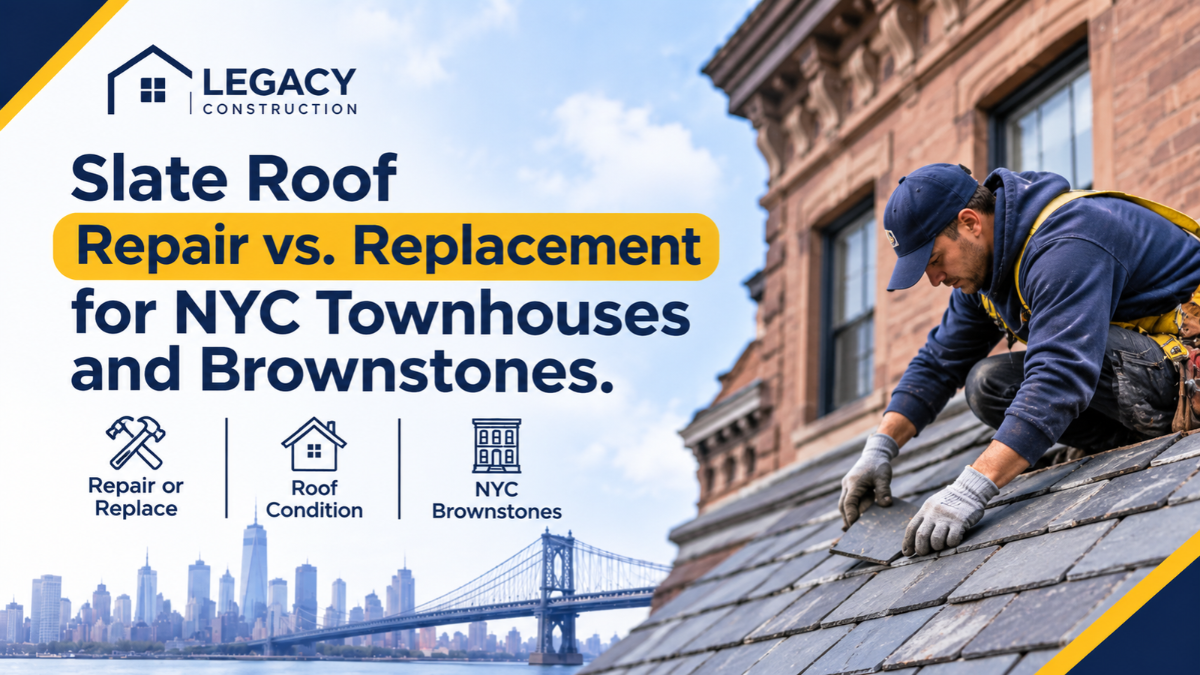
Slate roofs are a familiar sight on many older New York City townhouses and brownstones. Their natural appearance complements historic architecture, and well-maintained slate can last for generations. But even durable roofing materials eventually need attention. Cracked tiles, recurring leaks, and deteriorating flashing can leave homeowners wondering whether a few repairs will solve the problem or if it's time for a complete roof replacement.
The decision between slate roof repair vs. replacement isn't always straightforward. A roof that looks worn from the street may still have plenty of life left, while hidden damage beneath the slate can create bigger problems than expected.
For NYC property owners, understanding the condition of the entire roofing system is the best place to start. It helps avoid unnecessary replacement costs while ensuring the home stays protected.
Why Slate Roofs on NYC Brownstones Need Special Attention
Many older NYC townhouses and brownstones feature slate roofs with steep slopes, decorative rooflines, dormers, and chimneys. These details give the properties their distinctive character, but they also create areas where roofing problems can develop.
New York's weather doesn't make things any easier. Heavy rain, strong winds, snow, ice, and repeated freeze-thaw cycles gradually put pressure on roofing materials and metal components.
Some of the most common problems include:
- Cracked or missing slate tiles after storms or physical impact.
- Loose slates caused by deteriorating or corroded fasteners.
- Leaks around chimneys, valleys, and roof intersections.
- Flaking or separating slate that has deteriorated over time.
- Damaged flashing that allows water beneath the roofing surface.
One thing worth remembering is that a leaking slate roof doesn't automatically need new slate. Sometimes the actual problem is worn flashing, loose fasteners, or another roofing component that can be repaired without disturbing the rest of the roof.
When Is Slate Roof Repair the Better Option?
If the damage is limited to a few areas and most of the existing slate remains in good condition, repairs are often the more sensible choice.
The important thing is to look beyond the visibly damaged tiles. A proper inspection should also check the surrounding slate, flashing, fasteners, and underlying roof components.
1. Only a Few Slate Tiles Are Broken or Missing
Slate tiles can crack or come loose for several reasons, including falling branches, strong winds, accidental foot traffic, or natural defects in the material.
When the damage is limited, a roofing contractor can remove the affected pieces and install suitable replacement slates. Matching the existing tiles in size, thickness, color, and texture helps maintain the roof's original appearance.
There's little reason to disturb an otherwise healthy roof just because a few tiles need attention.
2. Most of the Existing Slate Is Still in Good Condition
An older slate roof isn't necessarily a failing roof. Some natural slate materials remain serviceable for decades, even when the property itself is quite old.
If most of the tiles are intact and show no widespread flaking, softening, or delamination, targeted repairs may be enough to extend the roof's useful life.
What matters is the condition of the slate, not simply how many years it has been installed.
3. The Problem Is Limited to Flashing or Fasteners
Not every roof leak comes from a broken slate tile.
Flashing around chimneys, dormers, valleys, and roof edges can deteriorate over time. Fasteners can also corrode, causing individual slates to loosen or slip out of position.
If the slate itself is still sound, addressing these problem areas may restore the roof's protection without requiring a complete replacement.
When Does Slate Roof Replacement Make More Sense?
There comes a point when repairing one section after another stops being practical. If several areas of the roof are deteriorating, individual repairs may only provide temporary relief.
In these situations, replacing the slate roof may be the better long-term option.
1. Slate Deterioration Is Widespread
A few cracked tiles are one thing. A roof with large sections of missing, sliding, or badly deteriorated slate is another.
When the material is failing across multiple areas, replacing individual tiles may no longer provide reliable protection.
**National Slate Association's slate roof condition assessment guidelines** offer a useful rule of thumb: when approximately 20% or more of the slates are damaged or deteriorated, replacement may become more practical. However, this isn't a fixed rule. The location of the damage, the condition of the remaining slate, and the state of the underlying roofing components all need to be considered.
2. Roof Leaks Keep Coming Back
A leak that returns after several repairs can be a sign that something more serious is happening.
Water may be getting in through deteriorated flashing, failed underlayment, damaged roof decking, or several weak points across the roof.
If the same problems keep appearing in different areas, it's worth having the entire roofing system inspected rather than continuing to patch individual spots.
3. The Underlying Roof Structure Is Damaged
Slate tiles are only one part of the roofing system. The roof deck, underlayment, flashing, and fasteners all play a role in keeping water out.
If moisture has damaged the underlying wood or several supporting components have deteriorated, installing new slate tiles alone won't solve the problem.
In these cases, the contractor needs to assess the extent of the damage and determine whether restoration or a more extensive replacement is necessary.
Slate Roof Repair vs. Replacement: What's the Difference?
Both options can protect your property, but they serve different purposes. The right choice depends on how much of the roof is affected and whether the existing materials are still worth preserving.
| Factor | Slate Roof Repair | Slate Roof Replacement |
|---|---|---|
| Damage | Limited to specific areas | Widespread deterioration |
| Slate condition | Mostly intact | Severely damaged or deteriorated |
| Work involved | Replacing individual tiles and repairing flashing | Removing and installing slate across affected roof sections |
| Initial cost | Generally lower | Generally higher |
| Project scope | Smaller, targeted work | More extensive roofing work |
| Best suited for | Isolated roofing problems | Extensive or recurring roof failures |
There's also another option that homeowners with older properties should consider: slate roof restoration.
Restoration involves carefully removing suitable existing slates, addressing damaged roofing components, and reinstalling materials that can still be used. For historic brownstones, this can be a practical way to preserve original roofing details without keeping damaged materials in place.
How Much Does Slate Roof Repair or Replacement Cost in NYC?
The cost of slate roof repair in NYC depends largely on the condition of the roof and the amount of work involved.
Replacing a few broken tiles will generally cost less than removing large sections of slate, repairing the roof deck, or installing an entirely new roofing system.
Several factors can affect the final estimate:
- Roof size and pitch: Larger and steeper roofs generally require more labor and safety equipment.
- Slate material: The type, thickness, color, and availability of natural slate can affect material costs.
- Roof accessibility: Older NYC townhouses may require scaffolding or specialized access arrangements.
- Flashing and fasteners: Deteriorated metal components may need to be repaired or replaced.
- Underlying damage: Problems with the roof deck or other supporting components can increase the scope of work.
- Historic requirements: Some properties need additional planning and material considerations before roofing work begins.
Rather than relying on a general price per square foot, it's better to have the roof inspected and request an itemized estimate based on its actual condition.
For more budgeting guidance, read our article on how much it costs to hire a roofing contractor in NYC.
What NYC Brownstone Owners Should Know About Historic Slate Roof Replacement
Replacing a slate roof on an older brownstone isn't quite the same as replacing roofing on a newer property. Original materials, architectural details, and preservation requirements may all influence the project.
For properties in designated NYC historic districts, exterior alterations may require review or approval from the NYC Landmarks Preservation Commission (LPC). The requirements depend on the property and the work being proposed.
Before starting a replacement project, keep a few things in mind:
- Preserve original materials where possible: If some of the existing slate is still serviceable, it may be worth retaining rather than replacing everything.
- Choose matching replacement slate: New materials should complement the original roof in color, size, thickness, and texture.
- Protect architectural details: Chimneys, dormers, roof edges, and decorative features should be considered when planning the work.
- Check preservation requirements: Confirm whether the proposed work requires LPC approval before construction begins.
The NYC Landmarks Preservation Commission's Rowhouse Manual is a useful resource for homeowners planning improvements to historic residential properties.
How to Choose the Right Slate Roofing Contractor in NYC
Slate roofing requires a different approach from standard asphalt shingle installation. The material needs careful handling, and repairs must be carried out without causing unnecessary damage to the surrounding tiles.
This is especially important on older townhouses and brownstones, where original roofing materials and architectural details may be difficult to replace.
Before hiring a contractor, ask whether they:
- Have experience repairing and restoring natural slate roofs.
- Know how to match and replace existing slate tiles.
- Inspect flashing, fasteners, and underlying roof components.
- Can identify the actual source of leaks rather than simply covering visible damage.
- Provide photographs and a written estimate explaining the recommended work.
If you're looking for a roofing contractor in the Bronx or a contractor in Queens, make sure they understand the specific requirements of your roof rather than relying only on general roofing experience.
You can also read our guide to flat roof vs. pitched roof maintenance for Queens properties for more information about maintaining different roofing systems.
Frequently Asked Questions
1. Can a slate roof be repaired without replacing the entire roof?
Yes. If only a few tiles are cracked or missing and the surrounding slate remains in good condition, those sections can often be repaired individually. There's no need to replace the entire roof when the damage is localized.
2. How long does a natural slate roof last?
A good-quality natural slate roof can last for many decades. The National Slate Association reports an average service life of approximately 75 years for good-quality slate, although some roofs last considerably longer. The slate type, installation quality, and maintenance all influence its lifespan.
3. What are the signs that a slate roof needs replacement?
Widespread cracked or missing tiles, extensive delamination, recurring leaks, deteriorated fasteners, and damage to the underlying roof structure can all indicate that replacement should be considered.
4. Is slate roof restoration better than replacement for historic brownstones?
It can be. If much of the original slate remains in good condition, restoration may allow those materials to be salvaged and reused while damaged components are addressed. Whether this is practical depends on the roof's overall condition.
5. Should I replace the slate if my roof is leaking?
Not necessarily. The leak could be coming from deteriorated flashing, chimney connections, loose fasteners, or damaged underlayment. Having the roof inspected first can help identify the actual problem and avoid unnecessary replacement work.
Making the Right Decision for Your NYC Slate Roof
A few damaged slate tiles don't necessarily mean your roof has reached the end of its life. In many cases, replacing individual slates or repairing deteriorated flashing is enough to get things back in order. But when damage is widespread, or the underlying roofing components have started to fail, replacement may be the more sensible investment.
For NYC townhouse and brownstone owners, preserving original slate wherever practical is also worth considering. The best way to decide is to have the entire roof inspected and understand what actually needs attention before committing to a major project.
Legacy Construction NYC Corp provides roofing and exterior construction services for New York City property owners. If you've noticed missing slate tiles, recurring leaks, or other signs of roof deterioration, the team can help you explore the appropriate next steps.
Need help with your slate roof?
Call Legacy Construction NYC Corp at (917) 635-5577 or contact Legacy Construction to discuss your project and request an estimate.
Reviewed by Legacy Construction NYC Corp roofing team, Licensed & insured New York roofing contractors
Frequently asked questions
Can a slate roof be repaired without replacing the entire roof?
Yes. If only a few tiles are cracked or missing and the surrounding slate remains in good condition, those sections can often be repaired individually. There's no need to replace the entire roof when the damage is localized.
How long does a natural slate roof last?
A good-quality natural slate roof can last for many decades. The National Slate Association reports an average service life of approximately 75 years for good-quality slate, although some roofs last considerably longer. The slate type, installation quality, and maintenance all influence its lifespan.
What are the signs that a slate roof needs replacement?
Widespread cracked or missing tiles, extensive delamination, recurring leaks, deteriorated fasteners, and damage to the underlying roof structure can all indicate that replacement should be considered.
Is slate roof restoration better than replacement for historic brownstones?
It can be. If much of the original slate remains in good condition, restoration may allow those materials to be salvaged and reused while damaged components are addressed. Whether this is practical depends on the roof's overall condition.
Should I replace the slate if my roof is leaking?
Not necessarily. The leak could be coming from deteriorated flashing, chimney connections, loose fasteners, or damaged underlayment. Having the roof inspected first can help identify the actual problem and avoid unnecessary replacement work.