Waterproofing
Waterproofing in the Bronx: Common Water Problems, Solutions & What Property Owners Should Know
Legacy Construction NYC Corp · · 9 min read
Learn about waterproofing in the Bronx, including basement leaks, foundation crack repairs, drainage solutions, costs and choosing a contractor.
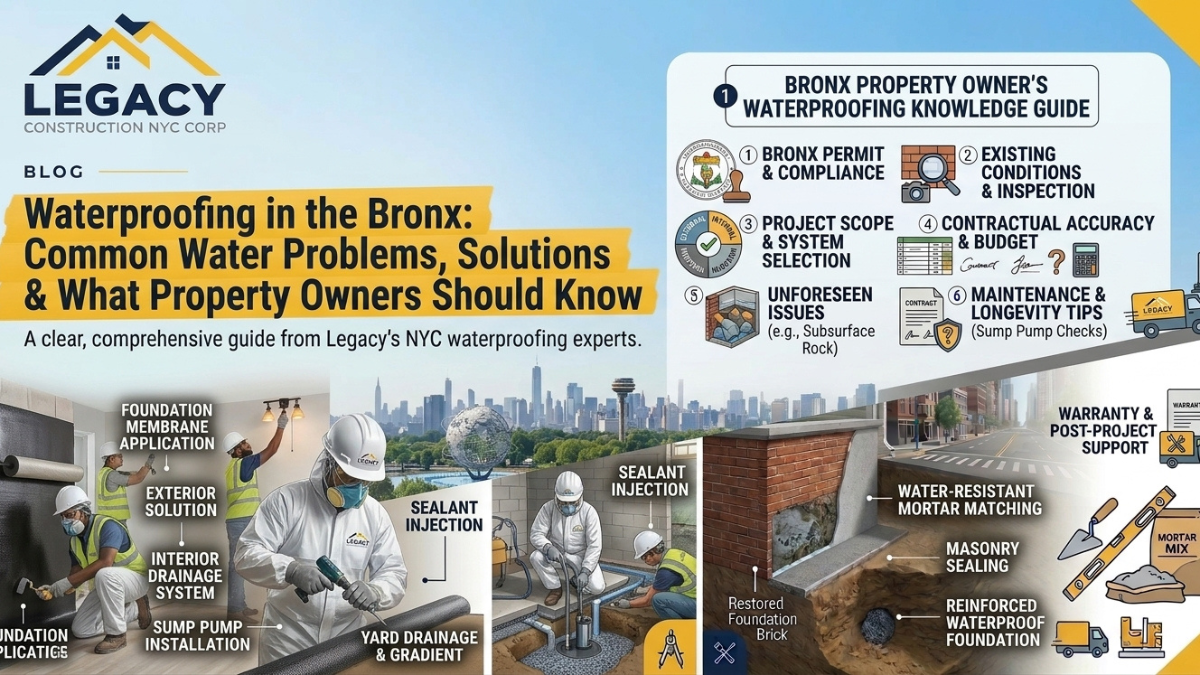
Water can enter a property through basement walls, foundation cracks, roof leaks, and damaged exterior surfaces. In the Bronx, where residential buildings, older homes, apartment properties, and commercial spaces may experience years of wear, moisture problems can become a concern for property owners.
Professional waterproofing helps identify where water is entering and what repairs may be needed to protect the building. Whether you have noticed damp basement walls, peeling paint, musty smells, or water collecting after heavy rain, understanding the cause is the first step toward choosing the right solution.
If you are looking for **waterproofing in the Bronx**, this guide explains common signs of water intrusion, available waterproofing methods, factors that affect repair costs, and what to consider when choosing a contractor.
Why Waterproofing Matters for Bronx Properties
Water intrusion can affect more than the appearance of a building. If moisture continues to enter, it may damage finishes, stored belongings, flooring, masonry, and other building materials.
Common reasons Bronx property owners consider waterproofing include:
- Basement moisture: Water entering through foundation walls, floor joints, or cracks.
- Heavy rainfall: Rainwater collecting near foundations or entering through vulnerable areas.
- Older masonry: Deteriorated mortar joints and cracks that allow water to pass through exterior walls.
- Roof and drainage problems: Leaks or blocked drainage systems that allow water to reach interior spaces.
- Poor exterior grading: Ground surfaces that direct rainwater toward the building rather than away from it.
The correct solution depends on where the water comes from. Sealing a visible crack, for example, may not solve the problem if water pressure, drainage issues, or another source is responsible.
Signs Your Property May Need Waterproofing
Water problems are easier to investigate when you recognize the early warning signs. Some symptoms appear gradually, while others become noticeable after a storm or a period of heavy rain.
1. Damp or Wet Basement Walls
Basement walls that remain damp or develop wet patches may indicate water intrusion. Moisture can enter through cracks, porous masonry, wall-floor joints, or areas where exterior waterproofing has deteriorated.
A contractor can inspect the affected areas and help determine whether the issue involves the foundation, drainage, or another source.
2. Musty Smells and Persistent Humidity
A musty smell in a basement or lower-level room can indicate ongoing moisture. Even when standing water is not visible, damp materials and poor ventilation may contribute to unpleasant indoor conditions.
It is worth investigating the source instead of relying only on air fresheners or ventilation equipment to manage the smell.
3. Cracks in Foundation Walls
Not every foundation crack indicates a serious structural problem, but cracks can provide a route for water to enter. Pay attention to cracks that leak, grow over time, or appear alongside other signs such as water stains or changes in the wall surface.
Cracks accompanied by wall movement, significant displacement, or other structural changes should be assessed by a qualified professional.
4. Peeling Paint or Bubbling Wall Finishes
Paint that bubbles, flakes, or separates from a wall may be reacting to moisture beneath the surface. These signs can occur in basements, ground-floor rooms, and other areas exposed to water intrusion.
Repainting without addressing the underlying moisture source may only provide a temporary improvement.
5. Water After Heavy Rain
If water appears in your basement after rainfall, the problem may involve surface drainage, foundation openings, window wells, or groundwater conditions.
Notice where water first appears and whether the problem follows particular weather conditions. This information can help a contractor narrow down possible causes.
Common Waterproofing Services in the Bronx
Waterproofing is not a single repair method. The appropriate approach depends on the building, the location of the leak, and the conditions allowing water to enter.
Basement Waterproofing
Basement waterproofing addresses moisture entering below ground level. Depending on the cause, work may involve sealing suitable cracks, treating affected surfaces, improving drainage, or installing a system to manage water that reaches the foundation.
For properties with recurring basement leaks, identifying the source is especially important before selecting a repair method.
Foundation Crack Repair
Crack repair may help prevent water from entering through certain foundation openings. The repair method depends on the crack's size, location, movement, and the material involved.
If a crack is associated with structural movement, a simple sealant may not be sufficient. The contractor should assess whether further structural evaluation is necessary.
Exterior Wall and Masonry Waterproofing
Exterior brickwork and masonry can allow moisture through deteriorated mortar joints, cracks, or damaged surfaces. Repairs may include repointing, repairing damaged masonry, and applying a suitable waterproofing treatment where appropriate.
For related information, see our guide to masonry services in the Bronx.
Roof Leak and Water Intrusion Repairs
Water entering through the roof can travel along building materials before becoming visible inside. A ceiling stain, for example, may appear some distance from the original leak.
Roof inspections and appropriate repairs can help address the source. Learn more about roofing contractor services in the Bronx.
Drainage Improvements
Water collecting near a building can increase the likelihood of moisture entering through vulnerable foundation areas. Depending on the site, possible improvements may include correcting surface grading, managing downspouts, clearing drainage routes, or installing a suitable drainage system.
Drainage work should be selected according to the property's layout and the source of the water.
Interior vs. Exterior Waterproofing: What's the Difference?
The best approach depends on how water reaches the building and what can be accessed safely.
| Waterproofing approach | What it involves | When it may be considered |
|---|---|---|
| Interior waterproofing | Managing moisture or water that reaches the inside of a foundation | When water enters the basement or needs to be collected and redirected |
| Exterior waterproofing | Treating or protecting the outside of foundation walls | When exterior access is possible and water entry through the foundation needs to be addressed |
| Crack repair | Sealing suitable cracks and openings | When a specific crack is allowing water to enter |
| Drainage improvements | Redirecting water away from vulnerable areas or managing collected water | When runoff or drainage contributes to the problem |
| Masonry waterproofing | Repairing masonry defects or applying suitable protective treatments | When exterior walls or mortar joints allow moisture through |
These methods are not interchangeable. Interior systems may help manage water without stopping it from reaching the foundation, while exterior work may address water entry at the outside surface. A professional inspection can help determine which approach is appropriate.
What Affects the Cost of Waterproofing in the Bronx?
Waterproofing costs vary according to the type of work required. A small, accessible crack may need a different level of effort than a basement with recurring water intrusion or a foundation that requires exterior excavation.
Factors that can affect the overall cost include:
- Size of the affected area: Larger walls, basements, or exterior surfaces may require more materials and labor.
- Source of the water: Surface runoff, plumbing leaks, foundation cracks, and groundwater may require different solutions.
- Accessibility: Work that requires excavation or removal of existing finishes may be more involved.
- Condition of the building: Damaged masonry, deteriorated concrete, or structural concerns can affect the scope of repairs.
- Drainage requirements: Some properties need additional work to manage water around the foundation.
- Materials and installation methods: The selected waterproofing system and preparation requirements influence the estimate.
It is best to request an inspection and a written estimate that explains the proposed work. Ask whether the price includes preparation, materials, drainage components, restoration, and any relevant follow-up work.
How to Choose a Waterproofing Contractor in the Bronx
Choosing a contractor involves more than comparing prices. You need to understand what is causing the water problem and whether the proposed repair addresses it.
Check Relevant Experience
Look for a contractor with experience in the type of problem affecting your property, whether that involves basement leaks, foundation cracks, exterior masonry, or roof-related water intrusion.
Ask about similar projects and how the contractor identifies the source of moisture before recommending a repair.
Request a Clear Inspection and Estimate
A useful estimate should explain the observed problem, recommended work, materials, and expected scope. If multiple solutions are possible, ask why one approach is more suitable for your property.
Be cautious of recommendations that focus only on covering visible stains without investigating why the area is getting wet.
Ask About Licensing, Insurance, and Permits
Check the contractor's applicable licensing and insurance, and confirm whether permits or other approvals are required for the proposed work. Requirements depend on the nature of the project.
The NYC Department of Buildings permit guidance can help property owners understand when a permit may be necessary.
Understand the Repair and Maintenance Plan
Ask what the repair is designed to address, whether any maintenance will be needed, and what conditions could cause the problem to return. A contractor should explain the limitations of the proposed method rather than promise that every possible moisture issue will be eliminated.
Property owners looking for broader building repair services can also explore contractor services in the Bronx.
Can Waterproofing Help Prevent Future Water Damage?
Waterproofing can help reduce water intrusion when the underlying cause is correctly identified and the repair is suitable for the building. However, no single method prevents every moisture problem.
Property owners can also take practical steps to reduce risk:
- Keep gutters and drainage routes clear where applicable.
- Check that downspouts direct water away from the foundation.
- Look for water collecting near exterior walls after rainfall.
- Inspect visible foundation cracks and damaged mortar joints.
- Address roof leaks and plumbing leaks promptly.
- Avoid storing moisture-sensitive belongings directly on basement floors.
- Investigate recurring dampness rather than repeatedly covering stains.
If water continues to appear after repairs, arrange a further assessment. The original diagnosis may need to be reviewed, or more than one source may be contributing to the problem.
Waterproofing for Residential and Commercial Properties
Waterproofing concerns can affect different types of Bronx properties, including private homes, apartment buildings, mixed-use properties, retail spaces, and commercial buildings.
For homeowners, the priority may be protecting a basement, laundry area, or finished lower-level room. Building managers may need to investigate recurring leaks that affect shared spaces, storage areas, or building materials. Commercial property owners may also need to consider how water intrusion affects the use of their premises.
The inspection and repair plan should reflect the building's construction, the affected area, and how the space is used.
Waterproofing in the Bronx: FAQs
What are the common signs that a basement needs waterproofing?
Common signs include damp walls, water stains, musty smells, peeling paint, visible leaks, and water collecting after rain. These symptoms can have different causes, so an inspection can help identify the right solution.
Is interior or exterior waterproofing better?
Neither option is best for every property. Interior systems can manage water that reaches the basement, while exterior waterproofing may help prevent water from entering through the outside of the foundation. The choice depends on the source of the moisture, access, and building conditions.
Can foundation cracks be repaired to stop leaks?
Some cracks can be sealed using suitable repair methods. However, cracks associated with structural movement or significant damage need further assessment. Repairing the visible opening alone may not address the underlying cause.
How much does waterproofing cost in the Bronx?
The cost depends on the affected area, water source, accessibility, materials, and repair method. A site inspection and written estimate are the most reliable ways to understand the likely cost for a particular property.
Does waterproofing require a permit in NYC?
Some work may require permits or other approvals, depending on the scope and type of construction. Property owners should confirm the requirements for their specific project with the contractor and the NYC Department of Buildings.
How can I prevent water from entering my basement?
Keep drainage routes clear, direct downspouts away from the foundation, address roof and plumbing leaks, and investigate cracks or recurring dampness. If water continues to enter, a professional assessment can help identify the cause.
When should I contact a waterproofing contractor?
Consider arranging an inspection when you notice recurring leaks, persistent dampness, water stains, or moisture after rainfall. Seek prompt professional help if water intrusion occurs alongside significant foundation cracking, wall movement, or other signs of possible structural damage.
Get Help With Waterproofing in the Bronx
Water intrusion can have several causes, and the right repair starts with understanding where the moisture is coming from. Whether you are dealing with a damp basement, foundation cracks, deteriorating masonry, or water entering after heavy rain, investigating the problem early can help you make a more informed decision about repairs.
Legacy Construction provides construction and property repair services for Bronx property owners. Visit Legacy Construction to learn more about its services or explore contractor services in the Bronx.
Reviewed by Legacy Construction NYC Corp roofing team, Licensed & insured New York roofing contractors
Frequently asked questions
What are the common signs that a basement needs waterproofing?
Common signs include damp walls, water stains, musty smells, peeling paint, visible leaks, and water collecting after rain. These symptoms can have different causes, so an inspection can help identify the right solution.
Is interior or exterior waterproofing better?
Neither option is best for every property. Interior systems can manage water that reaches the basement, while exterior waterproofing may help prevent water from entering through the outside of the foundation. The choice depends on the source of the moisture, access, and building conditions.
Can foundation cracks be repaired to stop leaks?
Some cracks can be sealed using suitable repair methods. However, cracks associated with structural movement or significant damage need further assessment. Repairing the visible opening alone may not address the underlying cause.
How much does waterproofing cost in the Bronx?
The cost depends on the affected area, water source, accessibility, materials, and repair method. A site inspection and written estimate are the most reliable ways to understand the likely cost for a particular property.
Does waterproofing require a permit in NYC?
Some work may require permits or other approvals, depending on the scope and type of construction. Property owners should confirm the requirements for their specific project with the contractor and the NYC Department of Buildings.
How can I prevent water from entering my basement?
Keep drainage routes clear, direct downspouts away from the foundation, address roof and plumbing leaks, and investigate cracks or recurring dampness. If water continues to enter, a professional assessment can help identify the cause.
When should I contact a waterproofing contractor?
Consider arranging an inspection when you notice recurring leaks, persistent dampness, water stains, or moisture after rainfall. Seek prompt professional help if water intrusion occurs alongside significant foundation cracking, wall movement, or other signs of possible structural damage.