Basement Remodel
How Long Does a Basement Remodel Take in NYC?
Legacy Construction NYC Corp · · 13 min read
Learn how long a basement remodel takes in NYC, from planning and permits to construction, waterproofing, and final inspections.
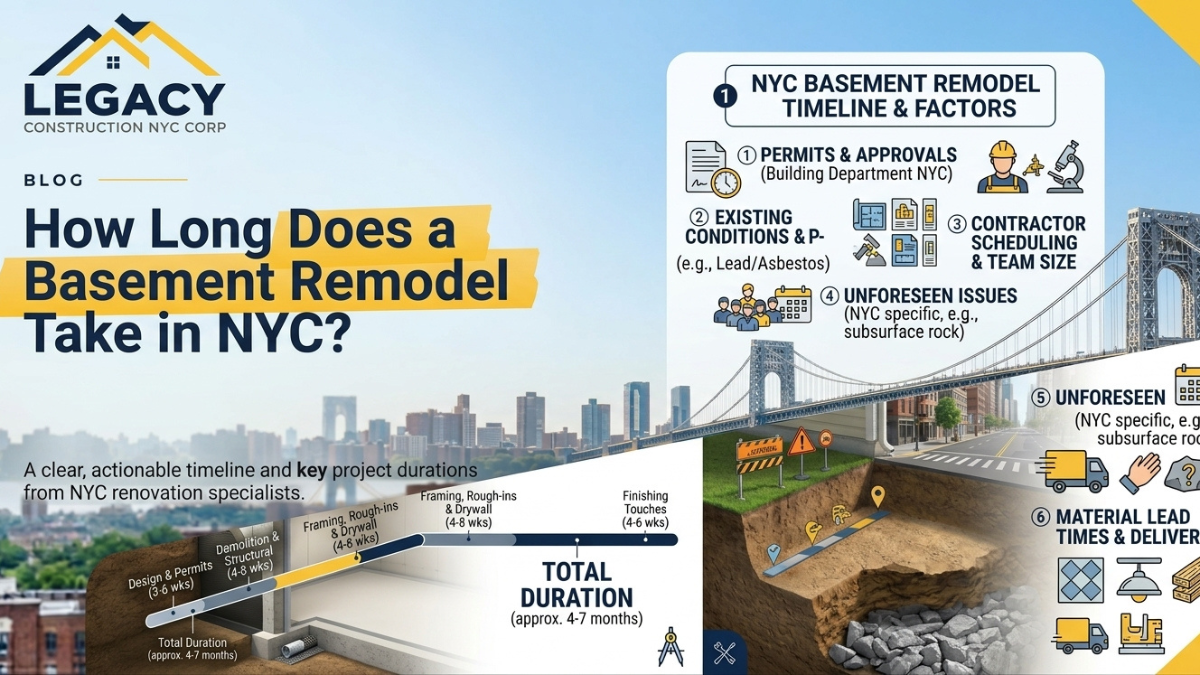
A basement remodel in New York City can take anywhere from a few weeks to several months, depending on the size of the space, the condition of the existing basement, and the amount of construction involved. A straightforward renovation with new flooring, paint, lighting, and storage may take around 2–6 weeks of on-site work. A more extensive project involving plumbing, electrical upgrades, waterproofing, layout changes, or structural work can take 2–6 months or longer, especially when design approvals and permits are required.
For NYC homeowners, the timeline depends on more than the construction itself. Older buildings may need repairs before finishing work can begin, and projects that change how a basement is used may require additional code review and approvals.
The best way to estimate your basement remodeling timeline is to separate planning and approvals from the actual construction work. Understanding each stage helps you set realistic expectations, coordinate contractors, and avoid delays that could extend the project.
How Long Does a Basement Remodel Usually Take?
The time required depends on the project's scope and the condition of the basement before work begins. A cosmetic update is very different from converting an unfinished basement into a fully equipped living area.
The following estimates are general planning ranges, not guaranteed schedules. Actual timelines vary by property, contractor availability, material lead times, and approval requirements.
| Type of Basement Remodel | Estimated On-Site Construction Time | Typical Scope of Work |
|---|---|---|
| Basic cosmetic renovation | 2–6 weeks | Painting, flooring, lighting, trim, and minor repairs |
| Partial basement renovation | 4–8 weeks | Updating selected areas, adding storage, replacing finishes, and improving lighting |
| Full basement remodel | 6–12 weeks | New layouts, walls, ceilings, flooring, electrical work, and multiple finish upgrades |
| Basement with a bathroom | 8–16 weeks | Plumbing, ventilation, waterproofing where needed, bathroom installation, and finishing |
| Basement with a kitchenette or extensive plumbing | 10–20 weeks | Plumbing, electrical work, cabinetry, ventilation, and coordinated installations |
| Major basement renovation or conversion | 3–6 months or longer | Structural changes, excavation, ceiling-height modifications, extensive drainage work, or changes in occupancy |
These ranges focus primarily on construction. Design, permit review, inspections, and other pre-construction activities can add several weeks or months to the overall schedule.
For example, a homeowner refreshing an existing finished basement may complete the work considerably sooner than someone converting an unfinished basement into a bathroom-equipped recreation area. A project intended to create a separate dwelling unit may require additional planning and regulatory review.
What Are the Main Stages of a Basement Remodel?
Most basement remodeling projects follow a series of stages. Some tasks can overlap, but certain work must be completed before the next stage can begin.
1. Initial Inspection and Project Planning
Estimated time: 1–3 weeks
The first stage involves evaluating the basement and deciding what needs to change. A contractor may inspect the walls, floor, ceiling height, visible plumbing, electrical systems, moisture conditions, and existing finishes.
During this stage, homeowners should establish:
- How the basement will be used.
- Which walls, floors, and ceilings need renovation.
- Whether a bathroom, laundry area, or kitchenette will be added.
- Whether moisture, drainage, or foundation repairs are necessary.
- Which materials and fixtures fit the budget.
- Whether professional design services or permits may be required.
Older NYC homes may have uneven floors, outdated wiring, aging plumbing, or previous repairs that affect the construction plan. Identifying these issues early can help prevent unexpected work after demolition begins.
Homeowners comparing contractors can also review this guide on what to look for in a basement remodeling contractor in the Bronx. It explains factors to consider when evaluating a contractor's experience and approach to basement projects.
2. Design, Permits, and Approvals
Estimated time: 2–8 weeks or longer, depending on the project
Not every basement renovation requires the same approvals. Minor cosmetic updates may follow a simpler process, while projects involving structural changes, new plumbing, electrical work, or a change in occupancy may require professional plans, permits, and inspections.
Before construction starts, confirm which approvals apply to the proposed work.
In NYC, the Department of Buildings provides information about basement and cellar apartment alteration requirements. Projects that create or alter a basement dwelling may involve additional requirements related to egress, fire separation, ventilation, and other building standards.
This stage can take longer when:
- Architectural or engineering drawings are required.
- Existing building records need to be reviewed.
- The proposed layout must be revised.
- The project involves structural changes or excavation.
- Additional approvals or inspections are necessary.
Important: A basement renovation does not automatically make the space legal for sleeping, living, or renting. If you plan to use the basement as a dwelling, confirm its permitted use and applicable requirements before finalizing the design.
3. Demolition and Site Preparation
Estimated time: 3–10 days
Once the project is ready to proceed, the contractor removes the materials that need replacing. This may include old flooring, ceiling panels, damaged drywall, outdated fixtures, built-in cabinets, or unwanted partitions.
The time required depends on how much of the existing basement must be removed and how easily workers can access the space.
Older basements may contain concealed problems, such as damaged framing, deteriorated pipes, moisture behind wall panels, or unapproved previous alterations. If demolition reveals unexpected conditions, the contractor may need to revise the scope and schedule.
Protecting the rest of the home from dust and debris is also important, particularly when the basement is accessed through an occupied living area.
4. Waterproofing, Drainage, and Foundation Repairs
Estimated time: 3 days to 3 weeks or longer
Moisture problems should be addressed before new flooring, drywall, and other finishes are installed. The appropriate repair depends on whether the water comes from exterior runoff, foundation seepage, groundwater, or plumbing leaks.
Work may include:
- Repairing suitable foundation cracks.
- Improving gutters and downspouts.
- Correcting drainage problems.
- Installing an appropriate interior drainage system.
- Repairing or replacing a sump pump.
- Applying a suitable waterproofing system.
- Allowing affected materials to dry before rebuilding.
Some minor repairs can be completed within days. More extensive drainage work, exterior excavation, or foundation repairs can add several weeks or more to the project.
Learn more about basement waterproofing vs. drainage to understand why identifying the source of moisture is an important step before choosing a repair.
Do not cover damp walls or install new flooring while a water problem remains unresolved. Doing so can conceal ongoing moisture and lead to damaged finishes later.
5. Plumbing, Electrical, and HVAC Work
Estimated time: 1–3 weeks
If the remodel includes a bathroom, laundry area, kitchenette, new lighting, or additional outlets, the relevant systems must be installed or upgraded before the walls and ceilings are closed.
This stage may involve:
- Installing or relocating plumbing lines.
- Preparing bathroom drainage and water supplies.
- Updating electrical wiring and outlets.
- Installing lighting circuits and switches.
- Adding ventilation or heating and cooling equipment.
- Coordinating inspections where required.
Projects involving several trades can take longer because each installation depends on access, material availability, and the completion of preceding work.
For example, adding a bathroom below the existing sewer line may require a suitable drainage solution. The feasibility and installation time depend on the existing plumbing arrangement and the proposed design.
6. Framing, Insulation, Drywall, and Ceilings
Estimated time: 1–3 weeks
Once the necessary behind-the-wall work is completed, the contractor can install or modify framing, insulation, drywall, and ceiling systems.
The timeline depends on the size of the basement and whether the project involves new rooms, partitions, bulkheads, or sound-control measures.
In NYC basements, ceiling height can be an important constraint. Existing pipes, ducts, beams, and other building systems may limit how much usable height remains after the ceiling is installed.
If the project requires lowering the floor or modifying structural elements to increase headroom, the work becomes considerably more complex and may require additional design, approvals, and construction time.
7. Flooring, Painting, Cabinets, and Fixtures
Estimated time: 1–3 weeks
This is the stage when the basement begins to look like the finished space shown in the design.
Typical tasks include:
- Installing suitable flooring.
- Painting walls and ceilings.
- Installing doors, trim, and baseboards.
- Fitting cabinets, shelving, and storage.
- Installing bathroom fixtures.
- Adding lighting fixtures and hardware.
- Completing final finish details.
The schedule can be affected by material lead times, custom cabinetry, flooring preparation, and the need to allow certain products to cure or dry.
Choosing materials before construction begins can help reduce delays. If a specific tile, vanity, flooring product, or light fixture is unavailable, installation may have to wait or the selection may need to change.
8. Final Inspections, Corrections, and Cleanup
Estimated time: 3 days to 2 weeks or longer
The final stage includes completing outstanding details, testing installed systems, correcting defects, and arranging required inspections.
Depending on the project, the contractor may need to check:
- Plumbing fixtures and drainage.
- Electrical installations and lighting.
- Ventilation and heating equipment.
- Doors, windows, and required exits.
- Flooring, paint, trim, and other finishes.
- Applicable permit sign-offs and documentation.
A small cosmetic project may need only a short punch-list period. Work requiring formal inspections or additional corrections can take longer, particularly if an issue must be resolved before the project can be signed off.
The basement should not be used for an occupancy purpose that is not permitted simply because the construction work appears complete.
What Factors Can Delay a Basement Remodel in NYC?
Even a well-planned basement renovation can encounter delays. NYC properties can present specific challenges because of their age, layout, shared building systems, and approval requirements.
Existing Water or Foundation Problems
Water intrusion, deteriorating masonry, foundation cracks, and poor drainage can delay finishing work. Repairs may need to be completed and the affected areas dried before installation of new materials.
Permit and Inspection Requirements
Projects that require formal review cannot always move directly from design to construction. Incomplete applications, plan revisions, and inspection corrections can extend the schedule.
Older Plumbing and Electrical Systems
Some basements contain outdated systems that are not suitable for the proposed layout. Upgrades can involve additional work beyond the original renovation plan.
Limited Access and Material Delivery
Narrow staircases, restricted entryways, limited storage, and busy streets can complicate the delivery of materials and removal of demolition debris. Apartments and attached homes may also require coordination with building management or neighbors.
Changes to the Original Design
Moving a bathroom, adding a kitchenette, changing the ceiling layout, or selecting different finishes after construction starts can affect both the budget and the completion date.
Contractor and Trade Scheduling
Basement remodels often require several trades to work in sequence. If a plumber, electrician, inspector, or specialist cannot attend as scheduled, subsequent tasks may also be delayed.
Seasonal and Site Conditions
Rainfall, groundwater conditions, and the need for exterior excavation can affect certain projects. Interior cosmetic work is generally less exposed to these conditions than extensive foundation or drainage work.
How to Keep Your Basement Remodeling Project on Schedule
Homeowners can reduce avoidable delays by making key decisions before work begins and maintaining clear communication with the contractor.
- Define the scope early. Decide how the basement will be used and which features are essential before requesting final estimates.
- Inspect for moisture and structural issues. Address known problems before installing finishes.
- Confirm permits and approvals. Establish which applications, licensed trades, and inspections apply to the project.
- Choose materials in advance. Finalize flooring, cabinets, fixtures, and lighting early enough to account for delivery times.
- Use a written construction schedule. Ask the contractor to outline the main stages, dependencies, and expected milestones.
- Avoid unnecessary mid-project changes. Discuss any requested changes before authorizing additional work.
- Coordinate the trades. Confirm who is responsible for scheduling plumbing, electrical, framing, and finishing work.
- Keep a contingency in the schedule. Allow extra time for concealed damage, material delays, and inspection corrections.
A reliable schedule should distinguish between the target completion date and tasks that depend on approvals, inspections, or conditions that cannot be confirmed until demolition begins.
How Much Does the Basement Remodel Timeline Depend on the Type of Project?
The intended use of the basement is one of the strongest indicators of how long the work may take.
| Basement Project | Main Time Considerations | What May Extend the Schedule |
|---|---|---|
| Home office | Flooring, lighting, outlets, and finishes | Electrical upgrades or soundproofing |
| Family or recreation room | Framing, drywall, flooring, and lighting | Moisture repairs or layout changes |
| Guest room | Finishes, ventilation, and applicable room requirements | Egress, ceiling-height, or other code issues |
| Basement bathroom | Plumbing, drainage, ventilation, waterproofing, and fixtures | Drainage constraints, plumbing changes, and inspections |
| Laundry room | Water supply, drainage, electrical work, and ventilation | Relocating existing services |
| Basement dwelling unit | Design, code compliance, plumbing, fire safety, egress, and approvals | Structural work, excavation, plan review, and required inspections |
These project types are not interchangeable from a regulatory perspective. In particular, creating a dwelling unit or changing how a basement is occupied may involve requirements beyond those for an ordinary renovation.
For this reason, homeowners should establish the proposed use before setting a construction schedule or comparing bids.
Can You Remodel a Basement in NYC in 30 Days?
Yes, a relatively straightforward basement renovation may be completed in approximately 30 days of on-site work if the space is already suitable for finishing and the project has a limited scope.
A 30-day schedule is more realistic when:
- The existing basement is dry and in good condition.
- No major structural work is needed.
- Plumbing and electrical systems require little or no modification.
- Materials are available before construction starts.
- Required approvals have already been addressed.
- The contractor has coordinated the necessary workers.
A full basement conversion involving a bathroom, extensive plumbing, waterproofing, structural changes, or a change in occupancy is unlikely to fit comfortably into the same schedule.
It is also important to distinguish 30 days of construction from 30 days for the entire project. Design, permits, procurement, and inspections may begin well before construction and finish after the main work is complete.
When Should You Hire a Basement Remodeling Contractor in NYC?
Consider hiring a qualified contractor when the project involves multiple trades, moisture problems, significant layout changes, or uncertainty about the condition of the existing basement.
A contractor can assess the space, identify potential obstacles, develop a work sequence, and provide an estimate based on the proposed scope.
Before hiring, ask for:
- Relevant experience with basement remodeling projects.
- A written scope of work and itemized estimate.
- A realistic schedule with key milestones.
- Details about permits, licensed trades, and inspections.
- Information about how unexpected repairs will be handled.
- References or examples of comparable completed projects.
- Appropriate licensing and insurance for the work involved.
For homeowners in the Bronx, reviewing what to look for in a basement remodeling contractor can help when comparing contractors and assessing their proposed approach.
Legacy Construction NYC Corp provides construction services for property owners in the area. Homeowners can explore its Bronx contractor services to learn more about its local construction work.
Frequently Asked Questions
1. How long does a typical basement remodel take?
A basic cosmetic basement remodel may take approximately 2–6 weeks of on-site work. A full renovation commonly takes 6–12 weeks, while projects involving bathrooms, major plumbing, waterproofing, structural work, or occupancy changes can take several months or longer.
2. How long does it take to finish an unfinished basement in NYC?
Finishing an unfinished basement may take around 6–12 weeks of construction, depending on its condition and the planned layout. Projects requiring drainage repairs, new plumbing, electrical upgrades, or permits may take longer.
3. Do NYC basement remodeling projects require permits?
Some minor renovations may qualify for permit exemptions, but work involving structural changes, electrical systems, plumbing, or changes in occupancy may require permits or other approvals. Requirements depend on the exact scope of work and the property.
4. Does waterproofing add time to a basement remodel?
Yes. Minor moisture repairs may add only a few days, while extensive drainage improvements, foundation repairs, or exterior excavation can add several weeks or more. The affected areas may also need to dry before new finishes are installed.
5. Can I live in my home during a basement remodel?
In many cases, homeowners can remain in the property during basement renovations. However, dust, noise, utility interruptions, restricted access, and safety concerns may affect daily routines. Larger projects may require additional precautions, particularly when building systems or occupied areas are affected.
6. What is the longest part of a basement renovation?
There is no single stage that takes the longest for every project. Design and approvals can extend the pre-construction period, while plumbing, structural repairs, waterproofing, and finishing work can take the most time on-site, depending on the scope.
7. Does adding a bathroom make a basement remodel take longer?
Usually. A basement bathroom requires coordination of plumbing, drainage, ventilation, waterproofing where needed, fixtures, and potentially inspections. Existing sewer connections and the need for new plumbing lines can significantly affect the schedule.
8. Can I use my basement as a rental apartment after remodeling?
Not automatically. A remodeled basement must meet applicable NYC requirements for its intended use, including relevant occupancy, egress, fire safety, ventilation, and other standards. Confirm the property's legal status and required approvals before planning to rent the space.
9. How can I avoid delays during a basement remodel?
Define the project scope early, resolve known moisture problems, confirm permit requirements, order materials in advance, and agree on a written schedule with your contractor. Allow additional time for concealed damage and inspection corrections.
Final Thoughts: Plan Your NYC Basement Remodel Around the Scope of Work
A basement remodel in NYC may take a few weeks for cosmetic improvements or several months for a full renovation involving plumbing, waterproofing, structural work, or changes in occupancy. The condition of the basement and the approval process can be just as important as the amount of finishing work.
Before construction starts, identify the purpose of the space, assess any moisture or foundation problems, confirm the necessary approvals, and agree on a realistic schedule with your contractor.
A well-planned basement renovation starts with a clear scope, realistic time allowances, and a construction sequence that addresses underlying problems before installing new finishes.
Reviewed by Legacy Construction NYC Corp roofing team, Licensed & insured New York roofing contractors
Frequently asked questions
How long does a typical basement remodel take?
A basic cosmetic basement remodel may take approximately 2–6 weeks of on-site work. A full renovation commonly takes 6–12 weeks, while projects involving bathrooms, major plumbing, waterproofing, structural work, or occupancy changes can take several months or longer.
How long does it take to finish an unfinished basement in NYC?
Finishing an unfinished basement may take around 6–12 weeks of construction, depending on its condition and the planned layout. Projects requiring drainage repairs, new plumbing, electrical upgrades, or permits may take longer.
Do NYC basement remodeling projects require permits?
Some minor renovations may qualify for permit exemptions, but work involving structural changes, electrical systems, plumbing, or changes in occupancy may require permits or other approvals. Requirements depend on the exact scope of work and the property.
Does waterproofing add time to a basement remodel?
Yes. Minor moisture repairs may add only a few days, while extensive drainage improvements, foundation repairs, or exterior excavation can add several weeks or more. The affected areas may also need to dry before new finishes are installed.
Can I live in my home during a basement remodel?
In many cases, homeowners can remain in the property during basement renovations. However, dust, noise, utility interruptions, restricted access, and safety concerns may affect daily routines. Larger projects may require additional precautions, particularly when building systems or occupied areas are affected.
What is the longest part of a basement renovation?
There is no single stage that takes the longest for every project. Design and approvals can extend the pre-construction period, while plumbing, structural repairs, waterproofing, and finishing work can take the most time on-site, depending on the scope.
Does adding a bathroom make a basement remodel take longer?
Usually. A basement bathroom requires coordination of plumbing, drainage, ventilation, waterproofing where needed, fixtures, and potentially inspections. Existing sewer connections and the need for new plumbing lines can significantly affect the schedule.
Can I use my basement as a rental apartment after remodeling?
Not automatically. A remodeled basement must meet applicable NYC requirements for its intended use, including relevant occupancy, egress, fire safety, ventilation, and other standards. Confirm the property's legal status and required approvals before planning to rent the space.
How can I avoid delays during a basement remodel?
Define the project scope early, resolve known moisture problems, confirm permit requirements, order materials in advance, and agree on a written schedule with your contractor. Allow additional time for concealed damage and inspection corrections.