Roofing advice
Roof Leaking Right Now? 7 Emergency Steps to Take Before the Roofer Arrives
Legacy Construction NYC Corp · · 12 min read
Roof leaking right now? Follow these 7 emergency steps to protect your property, limit water damage and prepare for professional roof repair in the Bronx.
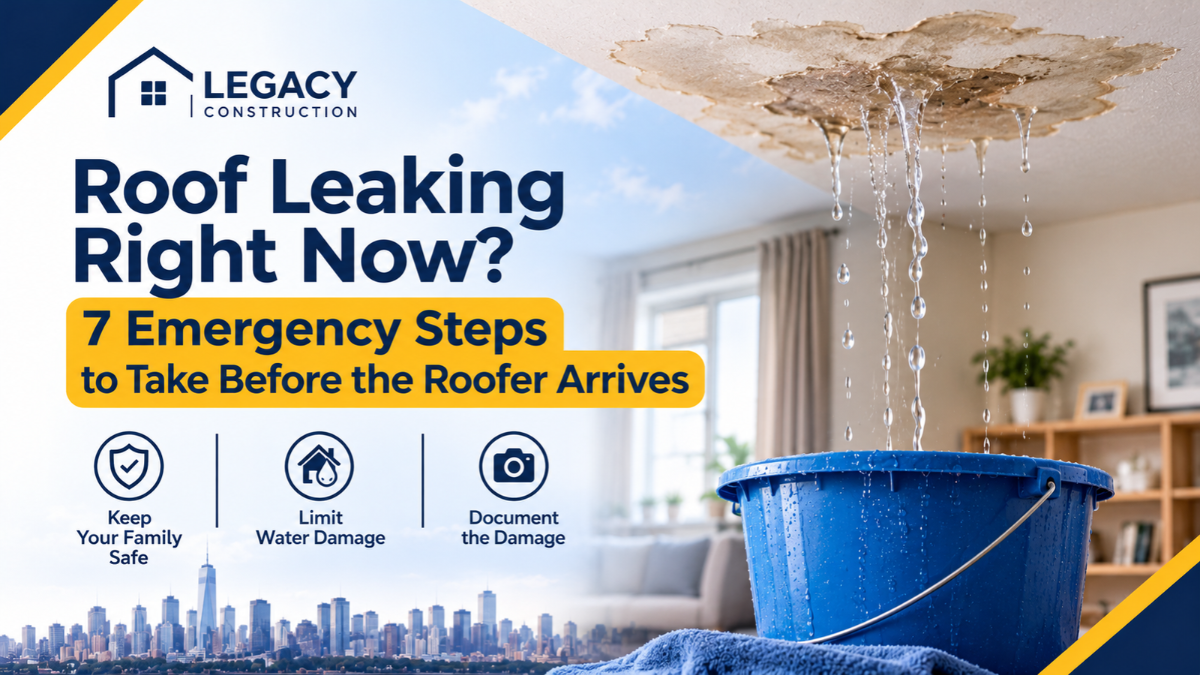
Heavy rain can quickly turn a small roof leak into a stressful situation, especially when water drips through your ceiling and onto your belongings. If you're wondering what to do when your roof is leaking during heavy rain, your first instinct might be to grab a ladder and look for the problem. But climbing onto a wet or storm-damaged roof is dangerous.
Instead, focus on protecting everyone inside, moving valuables away from the water and limiting further damage while you wait for a roofing contractor. Here are seven practical steps to help you handle the situation safely until a professional arrives.
If your roof is leaking, move people and valuables away from the water, catch drips with a bucket only if the ceiling is stable, stay away from wet electrical fixtures, photograph the damage, and stay off the roof. Then call an emergency roofer.
Legacy Construction NYC Corp. offers 24/7 emergency leak response in the Bronx.
7 Emergency Steps to Take When Your Roof Is Leaking
1. Move People and Valuable Belongings Away From the Leak
Before worrying about the water, make sure everyone in the house is safe.
If water is coming through the ceiling, move children, older family members, and pets out of the affected room. Pay particular attention to ceilings that look swollen, soft or unusually discolored. These can mean water has collected behind the ceiling material.
Once everyone is out of the way, start moving your belongings. Furniture, electronics, important documents, and anything that moisture can damage should come first. If water is spreading across the floor, move rugs, carpets, and other items that soak it up.
Some things worth protecting include:
- Sofas, beds, and other upholstered furniture.
- Computers, televisions, and electrical appliances.
- Important paperwork and personal documents.
- Rugs, carpets and curtains.
- Clothing and other items that are difficult to dry.
If something is too heavy to move, cover it with waterproof sheeting, but only if you can reach it without entering an unsafe area.
You don't have to clear the entire room. Focus on the spots where water is actively coming in and protect whatever you can safely move. A little action now can save you from replacing damaged belongings once the leak is fixed.
2. Contain the Water Without Taking Unnecessary Risks
After clearing the affected area, try to keep the water from spreading.
For a manageable drip, a bucket, plastic container, or large waterproof bowl placed under the leak can make a real difference. Put towels around the container to catch splashes and protect nearby flooring.
A few other things can help:
- Use plastic sheeting to cover flooring where water may spread.
- Move smaller belongings away from the affected area.
- Empty buckets before they become full.
- Keep the floor as clear as possible to avoid slipping.
- Check other rooms for signs of water entering the property.
Not every ceiling leak is safe to approach, though. If the ceiling is visibly sagging or bulging, don't stand underneath it to position a bucket. Water trapped above the ceiling adds a lot of weight, and damaged materials can give way without warning. Keep everyone away from the area instead.
Also keep in mind that the water dripping from your ceiling may not be directly below the damaged part of the roof. It can travel along roof decking, framing, and other building materials before it finds a way inside. That's why the visible leak is not always a reliable guide to where the roof needs repair. A proper inspection is needed to find the actual source.
3. Watch for Electrical Hazards and Ceiling Damage
This is one of the most important things to check when water starts entering your home.
Water near electrical wiring, ceiling lights, outlets, or switches creates a serious safety hazard. Even if the water doesn't seem to be reaching the electrical equipment directly, it's better not to take chances.
Keep these precautions in mind:
- Don't touch wet switches, outlets, or electrical fixtures.
- Avoid using electrical appliances in the affected room.
- Stay away from standing water that may be in contact with electrical equipment.
- If you can safely reach the relevant circuit breaker from a dry location, without approaching wet equipment, switch off the affected circuit.
- If the electrical panel is wet or unsafe to reach, leave it alone and contact a qualified electrician.
The American Red Cross guidance on checking household utilities after damage also explains why damaged electrical systems should be treated with caution.
What if the ceiling starts to sag?
A bulging or sagging ceiling needs immediate attention. It may mean water has collected above the ceiling material, which raises the risk of collapse.
Don't try to push the ceiling back into place or climb a ladder to investigate. Don't try to puncture the bulge to release the water either. Without knowing the condition of the ceiling and where the electrical wiring runs, that can make things more dangerous.
Keep people out of the affected room and arrange professional help. If the ceiling looks unstable or anyone is in immediate danger, leave the area and call 911.
Protecting the ceiling is never worth putting someone at risk.
4. Take Photos of the Damage for Insurance and Repair Records
Once the immediate safety concerns are handled, take a few minutes to document what's happening.
It might not seem important while you're dealing with a leaking roof, but photos and videos are useful later. Your roofing contractor may need them to understand the problem, and your insurance company may ask for documentation when you report the damage.
Try to capture:
- The ceiling area where water is entering.
- Water stains, bubbling paint, or damaged drywall.
- Water collecting on floors.
- Furniture and belongings affected by moisture.
- Other rooms showing signs of water damage.
- Visible exterior roof damage, if you can photograph it safely from the ground.
Make a note of when you first noticed the leak. Did it start during heavy rain? After strong winds? Or on a dry day? These details help establish when the problem began and give the roofer useful information during the inspection.
Keep receipts for reasonable emergency expenses and temporary measures you take to protect the property. If belongings are damaged, make a simple list of what was affected. The National Association of Insurance Commissioners has guidance on filing a homeowners claim, including how to document damage and keep an inventory of your belongings.
It's also a good idea to contact your insurance provider and ask what documentation your policy requires. Keep in mind that homeowners insurance doesn't automatically cover every roof leak. Coverage depends on your policy, what caused the damage, and the circumstances.
5. Stay Off the Roof and Avoid DIY Emergency Repairs
When you can see water coming through your ceiling, it's tempting to head straight to the roof and try to stop it.
But climbing onto a roof during heavy rain or shortly after a storm is extremely dangerous. Wet shingles, slippery surfaces, and damaged roofing materials create risks that aren't always obvious from the ground. Even a roof that looks stable may have weakened sections that can't support your weight.
Avoid:
- Climbing onto the roof during rain or strong winds.
- Walking across wet or damaged roofing materials.
- Trying to replace missing shingles yourself.
- Applying sealants to areas you haven't safely inspected.
- Using ladders to reach damaged roof sections.
- Installing a temporary tarp without proper equipment and safety precautions.
There's another reason not to rush into a DIY repair: the spot where you see damage may not be where the water is getting in. A damaged flashing joint or membrane seam, for example, can send water along the roof structure before it shows up inside. Covering the area you can see may not fix the real problem.
Different roofing systems also need different repairs. If you want to understand how they differ, our guide to **flat roof vs. pitched roof maintenance** explains the key points.
For now, leave roof access, inspection, and temporary repairs to professionals who have the right equipment and experience.
6. Call an Emergency Roofing Contractor and Explain the Problem
Once everyone is safe and you've taken reasonable steps to protect the interior, it's time to call a roofing contractor.
If water is actively coming in, don't wait until the ceiling shows more damage. The sooner a professional looks at the roof, the sooner you'll know what's causing the leak and what needs to happen next.
When you call, describe the problem as clearly as you can. You don't need to know exactly what's wrong with the roof. A few basic details will help the contractor understand what they're dealing with.
| Information | What to tell the contractor |
|---|---|
| Property location | Your address and borough |
| Roof type | Flat, pitched, shingle, metal, or membrane, if known |
| Leak location | Which room, ceiling, or floor is affected |
| Leak severity | Slow dripping, continuous water, or significant water entry |
| Electrical concerns | Whether water is near lights, outlets, or wiring |
| Ceiling condition | Whether there are stains, bubbling, or visible sagging |
| Weather conditions | Whether the leak started during heavy rain or after a storm |
| Previous problems | Whether the same area has leaked before |
If possible, share photos taken from a safe location. They can help the contractor understand the damage before arriving.
If you're looking for an emergency roofing contractor in the Bronx, choose one that knows the borough's mix of houses, multifamily buildings, and commercial properties. Legacy Construction NYC Corp. is based in the Bronx and offers 24/7 emergency leak response alongside roof repair, flat roofing, and roof replacement. You can learn more about its emergency roof repair services in NYC or its roofing contractor services in the Bronx.
7. Prepare for Emergency Tarping and Permanent Roof Repairs
Calling a roofer is an important step, but temporary roof leak protection isn't the same as fixing the roof.
Depending on the damage and the weather, the contractor may recommend temporary protection before doing permanent repairs. Emergency roof tarping is one option when part of the roof is damaged and needs protection from more rain. Whether it makes sense depends on the condition of the roof and whether the work can be done safely.
Once the immediate situation is under control, the contractor can look for the source of the leak and recommend repairs. Depending on what the inspection finds, the work may involve:
- Replacing missing or damaged shingles.
- Repairing loose or deteriorated flashing.
- Fixing damaged flat-roof membranes or seams.
- Clearing or repairing roof drainage systems.
- Addressing problems around vents, skylights, and other roof openings.
- Checking whether the underlying roofing materials have been affected.
A leak caused by missing shingles needs a different repair from one caused by a damaged flat-roof membrane, which is why finding the cause comes first.
Ask the contractor what the inspection found, whether temporary protection is needed, and what permanent work they recommend. It's also worth asking for a clear explanation of the estimated costs and the expected timeline.
Don't assume a temporary patch has solved the problem for good. The underlying damage still needs to be assessed.
When Is a Roof Leak an Emergency?
Not every roof leak is equally serious, but it's important to recognize when a situation needs immediate attention.
A small ceiling stain may point to an issue that needs a prompt inspection. Active dripping, water near electrical fixtures, or a visibly sagging ceiling calls for a much more urgent response.
Here's a simple way to tell the difference:
| Situation | What you should do |
|---|---|
| Small ceiling stain with no active dripping | Arrange a professional roof inspection promptly |
| Continuous water dripping | Protect the affected area and contact an emergency roofer |
| Water near electrical fixtures | Keep away and arrange qualified electrical assistance |
| Bulging or sagging ceiling | Leave the affected area and seek urgent professional help |
| Visible structural roof damage | Keep people away and seek emergency assistance |
| Heavy water entering multiple rooms | Prioritize safety and arrange an emergency roof assessment |
If there's an immediate threat to life or safety, call 911 rather than waiting for a roofing contractor.
Not sure whether your leak counts as an emergency? Call (917) 635-5577 and describe what you're seeing.
Common Roof Leak Problems in Bronx Properties
Not all roofs are built the same way, and the source of a leak often depends on the roofing system on the property.
The Bronx has a mix of residential homes, multifamily buildings and commercial properties. Many have different roofing materials and drainage setups, so the problems property owners run into can vary.
Here are some common areas where roof leaks develop.
Flat Roof Leaks
Flat and low-slope roofs are found on many multifamily and commercial buildings. They rely on roofing membranes and working drainage systems to keep water out. Our flat roofing work in the Bronx covers these systems.
Over time, certain areas can become vulnerable to water intrusion, including:
- Damaged or separated membrane seams.
- Deteriorated flashing around roof edges.
- Blocked roof drains or scuppers.
- Damaged areas around rooftop equipment.
- Ponding water caused by drainage or roof-surface problems.
If you notice a leak beneath a flat roof, don't assume the damaged area is directly above the ceiling stain. Water can move through different parts of the roof assembly before it enters the property. A professional inspection should look at the membrane, drainage system, flashing, and other possible entry points.
Missing or Damaged Shingles
Pitched roofs often use asphalt shingles to protect the roof structure underneath. Over time, weather exposure, aging materials, and strong winds can lead to cracked, loose or missing shingles.
When that protective layer is damaged, rainwater can reach the materials underneath and eventually find its way into the property.
If you can see missing shingles from the ground, take a photo and share it with your roofing contractor. There's no need to climb onto the roof to confirm the damage.
Flashing and Chimney Leaks
Flashing is used where roofing materials meet other parts of a building. These connections need proper protection because they can become entry points for water.
Common examples include:
- Chimneys.
- Skylights.
- Roof vents.
- Roof-to-wall connections.
- Other roof openings.
If flashing becomes loose, damaged, or deteriorated, rainwater can enter through the affected joint. The leak may not be visible from outside, which is why an inspection of these areas matters.
Roof Drainage Problems
Sometimes the roofing material isn't the only thing worth checking.
Blocked drains, gutters, and drainage outlets can stop rainwater from flowing away properly. On flat roofs, drainage problems can lead to standing water and raise the risk of water damage. Regular upkeep of roof drains and gutters helps, and gutter cleaning is one of the simplest ways to keep water from backing up under the roof edge.
If you're dealing with recurring water intrusion or moisture problems around your property, our article on **waterproofing in the Bronx** explains some of the common causes and possible solutions.
Leaks in Multifamily Buildings: Who to Call
If you rent in a multifamily building, report the leak to your landlord or building manager as soon as you notice it, preferably in writing, and attach your photos. If the leak isn't addressed, you can file a housing maintenance complaint through 311. Keep a record of the dates you reported it and any response you receive.
Winter Leaks and Ice Dams
In winter, a leak can come from an ice dam, which forms when snow melts on a warm roof and refreezes at the edge. The ice can force water back under the roofing materials. Don't chip at the ice or climb up to clear it yourself. Ice, snow, and a sloped surface are a dangerous combination, and a roofer can remove it safely.
What Should You Expect When an Emergency Roofer Arrives?
If you've never dealt with an emergency roof repair before, you might wonder what happens after you make the call. The exact process depends on
Reviewed by Legacy Construction NYC Corp roofing team, Licensed & insured New York roofing contractors
Frequently asked questions
What should I do first if my roof starts leaking?
Move people and valuable belongings away from the affected area. Check for electrical hazards and signs of ceiling damage. If the area is safe, place a bucket underneath manageable drips. Take photographs of the damage and contact an emergency roofing contractor.
Should I turn off the electricity if water comes through the ceiling?
If water is reaching electrical fixtures, outlets, or wiring, stay away from the affected area. If you can safely reach the relevant circuit breaker from a dry location, switch off the affected circuit. Never touch wet electrical equipment or enter standing water to reach a breaker. If you're unsure, contact a qualified electrician.
Can I temporarily stop a roof leak myself?
You can manage some interior water using buckets and towels, provided the area is safe. However, climbing onto the roof, applying patches, or installing a tarp during wet or stormy conditions can be dangerous. Roof-level emergency repairs are best left to qualified professionals.
Should I put a bucket under a leaking ceiling?
Yes, if the ceiling is stable and the area is safe to approach. A bucket can collect manageable drips and help prevent water from spreading across the floor. However, never stand underneath a bulging or sagging ceiling to position a container.
Can a roof leak cause a ceiling to collapse?
Yes. Water collecting above ceiling materials can add weight and weaken the affected area. A visibly sagging or bulging ceiling should be treated as a potential collapse hazard. Keep everyone away from the room and arrange urgent professional assistance.
Does homeowners insurance cover emergency roof repairs?
It depends on your insurance policy and what caused the damage. Some policies cover certain sudden and accidental events, while damage associated with deterioration or neglected maintenance may be excluded. Contact your insurance provider, document the damage, and keep receipts for emergency expenses.
How quickly should I call an emergency roofer?
If water is actively entering your property, contact a roofing contractor as soon as possible. Don't wait for the damage to spread. If the leak is severe or involves electrical hazards or ceiling instability, prioritize safety and seek the appropriate emergency assistance.
Can a flat roof leak during heavy rain?
Yes. Water can enter through damaged membrane seams, deteriorated flashing, roof penetrations, or drainage-related problem areas. Heavy rainfall can make existing weaknesses more noticeable. A professional inspection is needed to determine the actual source of the leak.